JET ART GALLERY   /   THE SPITFIRE STORY

ENDURING LEGACY

From the final months of the Second World War to the present day: the Spitfire’s enduring place in aviation history.

Discover how the aircraft continued in service, inspired generations and became one of Britain’s most recognisable aviation icons.

British WWII fighter taking off from an aircraft carrier at sea, with another ship in the distance and a sunset glow on the water

THE STORY

Beyond the war

By the end of the Second World War, the Spitfire had evolved far beyond the fighter that first entered RAF service in 1938. Its wartime development produced increasingly capable variants, while the naval Seafire adapted the design for service at sea.

Although jet aircraft soon transformed frontline air power, the Spitfire’s story did not end in 1945. Later marks remained in service with air forces around the world, and reconnaissance versions continued to demonstrate the adaptability of the original design.

Today, surviving aircraft are preserved in museums and, in some cases, maintained in flying condition. Their appearances at commemorations and air displays connect modern audiences with the pilots, engineers, ground crews and factories behind the aircraft’s history.

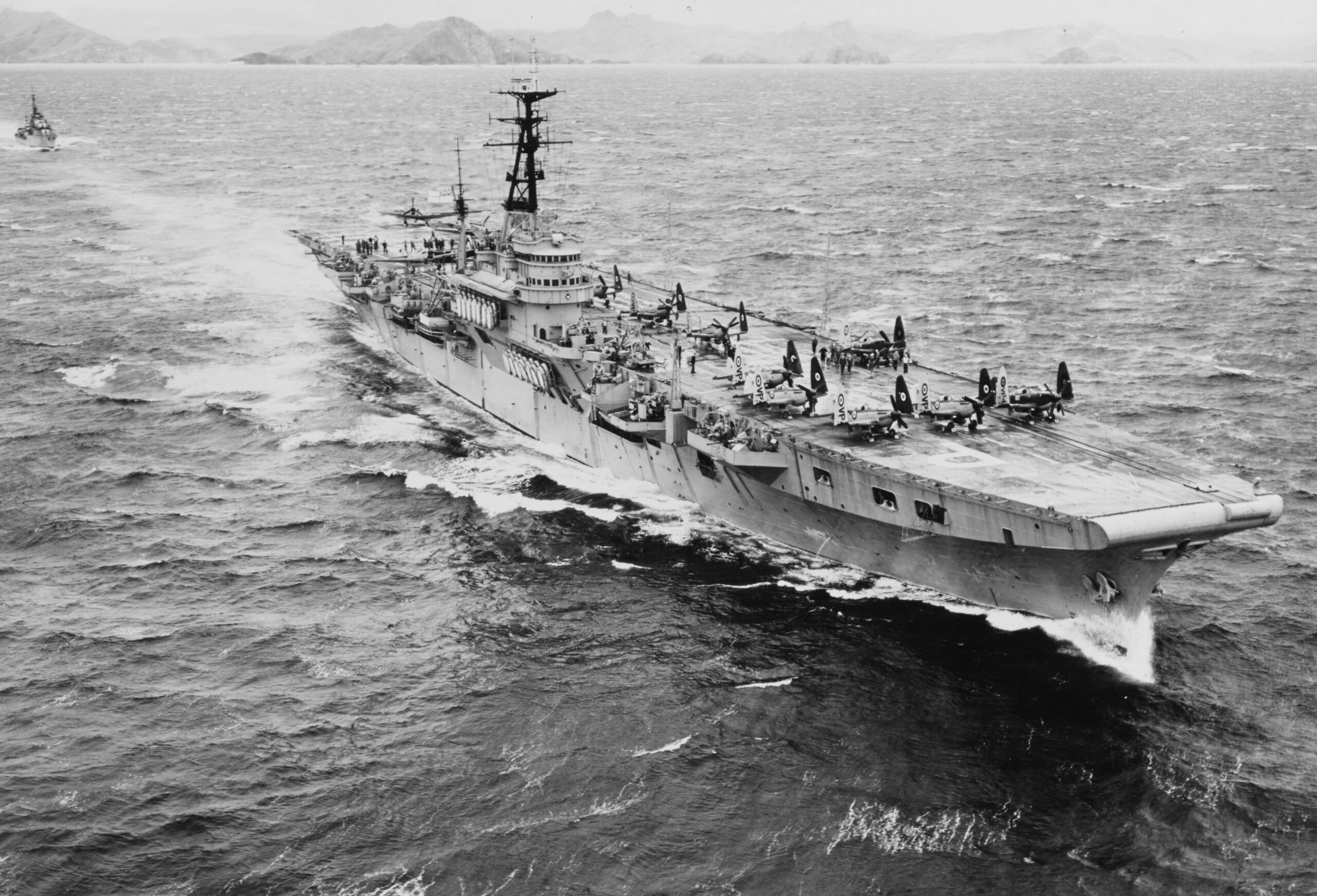
One striking example of that continuing service was HMS Triumph, which deployed to Korean waters in 1950 with Seafire F.R.47 fighters of 800 Naval Air Squadron and Fairey Fireflies. The Seafires flew combat air patrols, reconnaissance and strikes in support of United Nations operations, showing how the Spitfire’s naval descendant remained active even as jet aircraft came to dominate the skies.

THE LEGACY LIVES ON

Warship at sea with planes parked on its flight deck and small boats nearby, in a calm, distant island-scape.
HMS Triumph at sea with Seafires and Fireflies on her flight deck, 1950. Source: Royal Navy Research Archive.

HMS Triumph with her Seafires and Fireflies during the Korean War, 1950. Read the Royal Navy Research Archive account.

AFTER THE WAR

Service, preservation and remembrance

The Spitfire’s development continued through the later war years, with improvements in engines, armament and airframe design. Post-war air forces operated late-production variants even as jet fighters increasingly assumed frontline roles. The Royal Air Force’s last operational Spitfire sortie was flown by a photo-reconnaissance aircraft in Malaya in 1954.
The Seafire and a naval inheritance

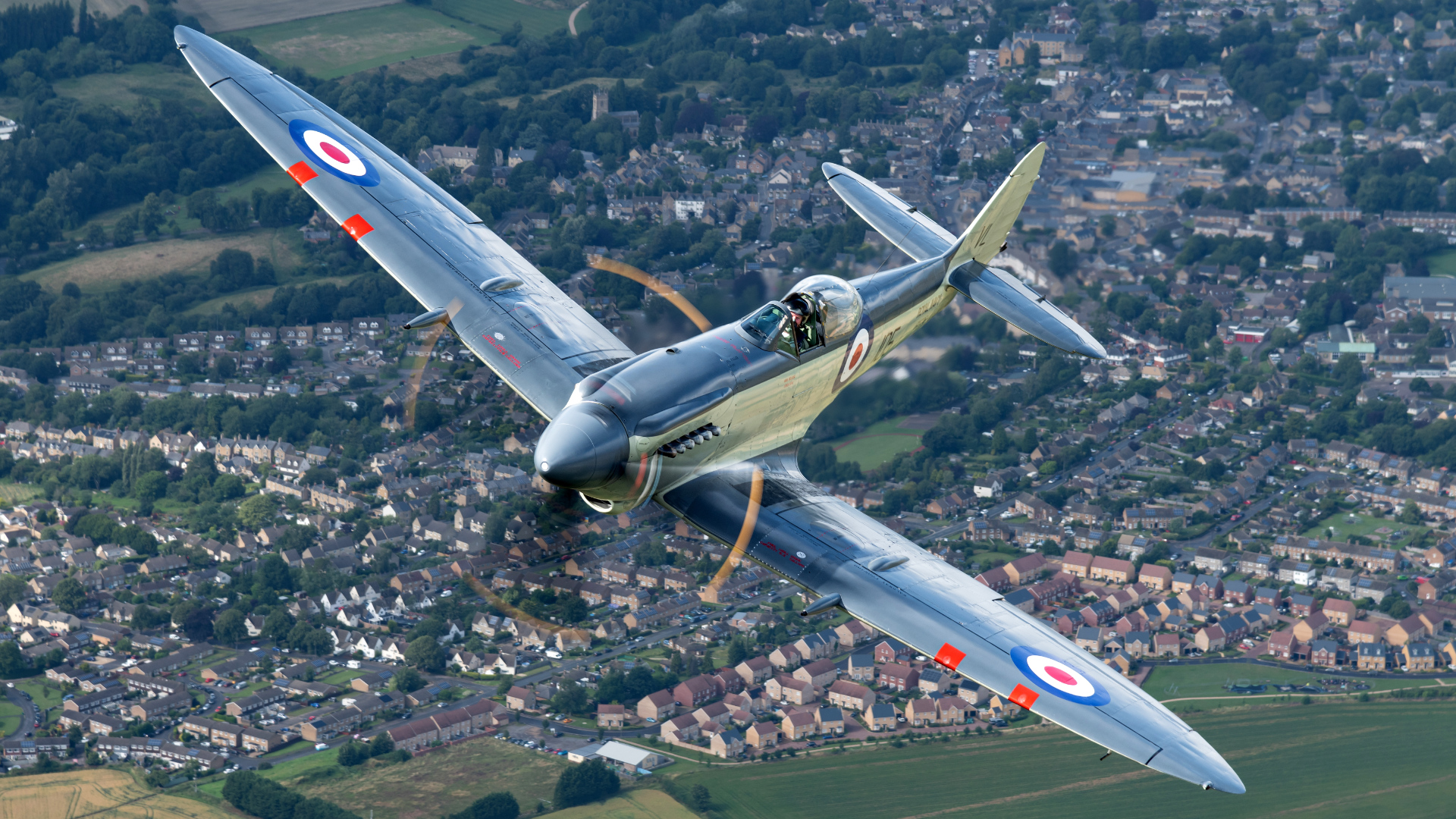
Navy Wings Supermarine Seafire Mk XVII SX336 in flight
Supermarine Seafire Mk XVII SX336 in flight. Photograph courtesy of Navy Wings (navywings.org.uk).

The Fleet Air Arm’s Seafire carried the Spitfire lineage to aircraft carriers. An outstanding surviving example is Navy Wings’ Seafire Mk XVII SX336, built at Yeovil in 1946 and restored to flying condition. Navy Wings acquired SX336 in 2021 and continues to preserve its naval aviation story. Naval operations demanded arrestor hooks, strengthened structures and demanding deck-handling skills. Its history deserves a place in the wider story of the Spitfire, even though naval service presented challenges quite different from those faced by land-based RAF squadrons.
Seafires in Korea, 1950

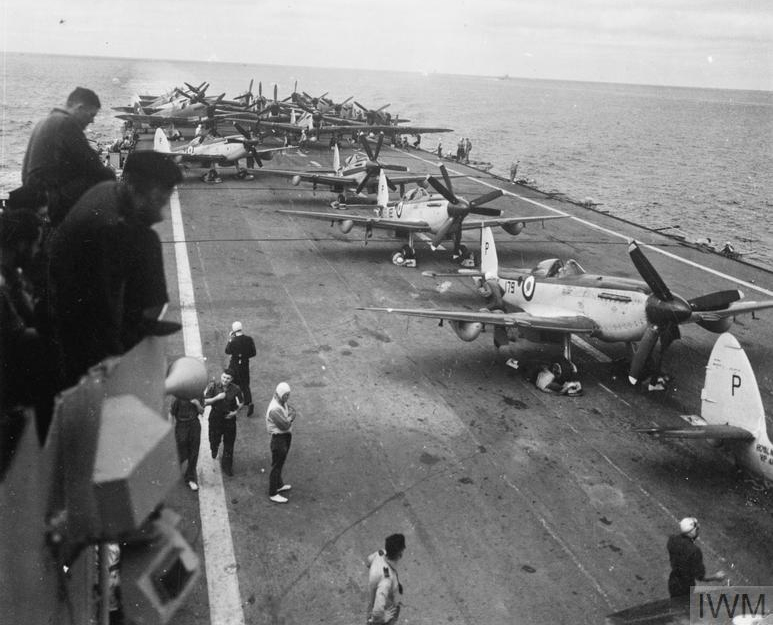
Seafire F.R.47 fighters and Fairey Firefly aircraft on the flight deck of HMS Triumph during the Korean War, 1950
Seafire F.R.47s and Fairey Fireflies aboard HMS Triumph, 1950. Imperial War Museums A 31698A; via Royal Navy Research Archive.

The Seafire’s service did not end with the Second World War. In June 1950, HMS Triumph was carrying Seafire F.R.47 fighters of 800 Naval Air Squadron and Fairey Fireflies of 827 Naval Air Squadron when the Korean War began. The carrier was diverted from its planned return to Britain and joined United Nations operations off Korea. On 3 July 1950, twelve Seafires took part in the first carrier strike flown by the British force, attacking an airfield alongside nine Fireflies.

Seafires subsequently provided combat air patrols, armed reconnaissance and support for naval operations. Their demanding carrier landings and the shortage of replacement aircraft highlighted the strains of keeping ageing piston-engined fighters operational as the jet age advanced. Read the Royal Navy Research Archive account of HMS Triumph and the 13th Carrier Air Group.

Keeping the story alive

Founded in 1957 and now based at RAF Coningsby, the Battle of Britain Memorial Flight (BBMF) preserves and operates historic aircraft as a flying tribute to those who served. Its Spitfires, Hurricanes, Lancaster and other aircraft appear at commemorations and public events, supported by the specialist work of RAF aircrews and engineers.

Guided by ‘Lest We Forget’, the Flight helps future generations understand the people and sacrifices behind these aircraft. Discover the BBMF on the official RAF website.
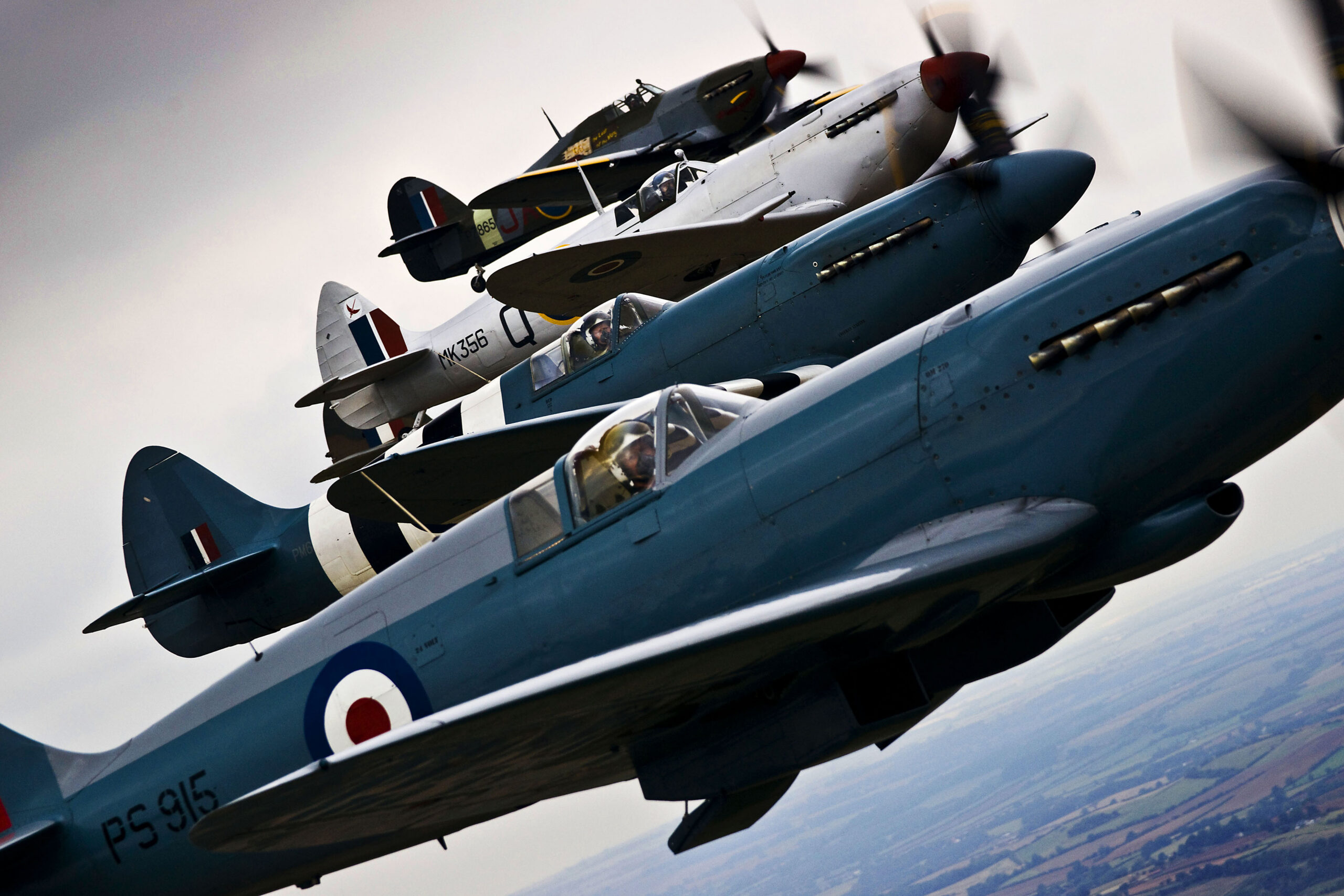
Battle of Britain Memorial Flight Spitfires and Hurricanes flying over Lincolnshire
BBMF aircraft over Lincolnshire. Photograph: SAC Sally Raimondo / MoD, Open Government Licence.

Preservation organisations, museums, restoration specialists and volunteer engineers have helped keep surviving Spitfires visible to new generations. Historic aircraft are valuable not only as machines but also as starting points for understanding the experiences of the people who designed, built, maintained and flew them.

The Spitfire’s legacy is therefore more than a familiar silhouette or a celebrated wartime reputation. It is a continuing story of engineering, service, remembrance and the responsibility to preserve historical evidence.
FEATURED WORK

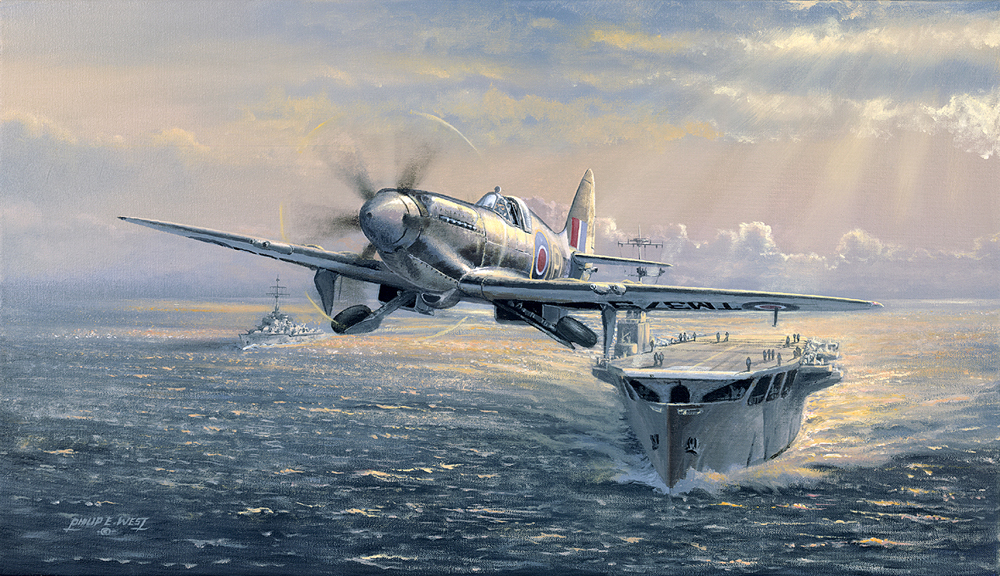
No Room for Error

Philip E. West captures Captain Eric ‘Winkle’ Brown launching the prototype Seafire Mk 45 from HMS Pretoria Castle in July 1945. A fitting tribute to the Spitfire’s naval legacy.

EXPLORE THE CHAPTER

Selected artworks: the Spitfire and the jet age

Explore Spitfire commemorative artwork alongside selected prints that trace the RAF’s transition to jet-powered aircraft. The jet artworks provide historical context rather than depicting Spitfire operations.

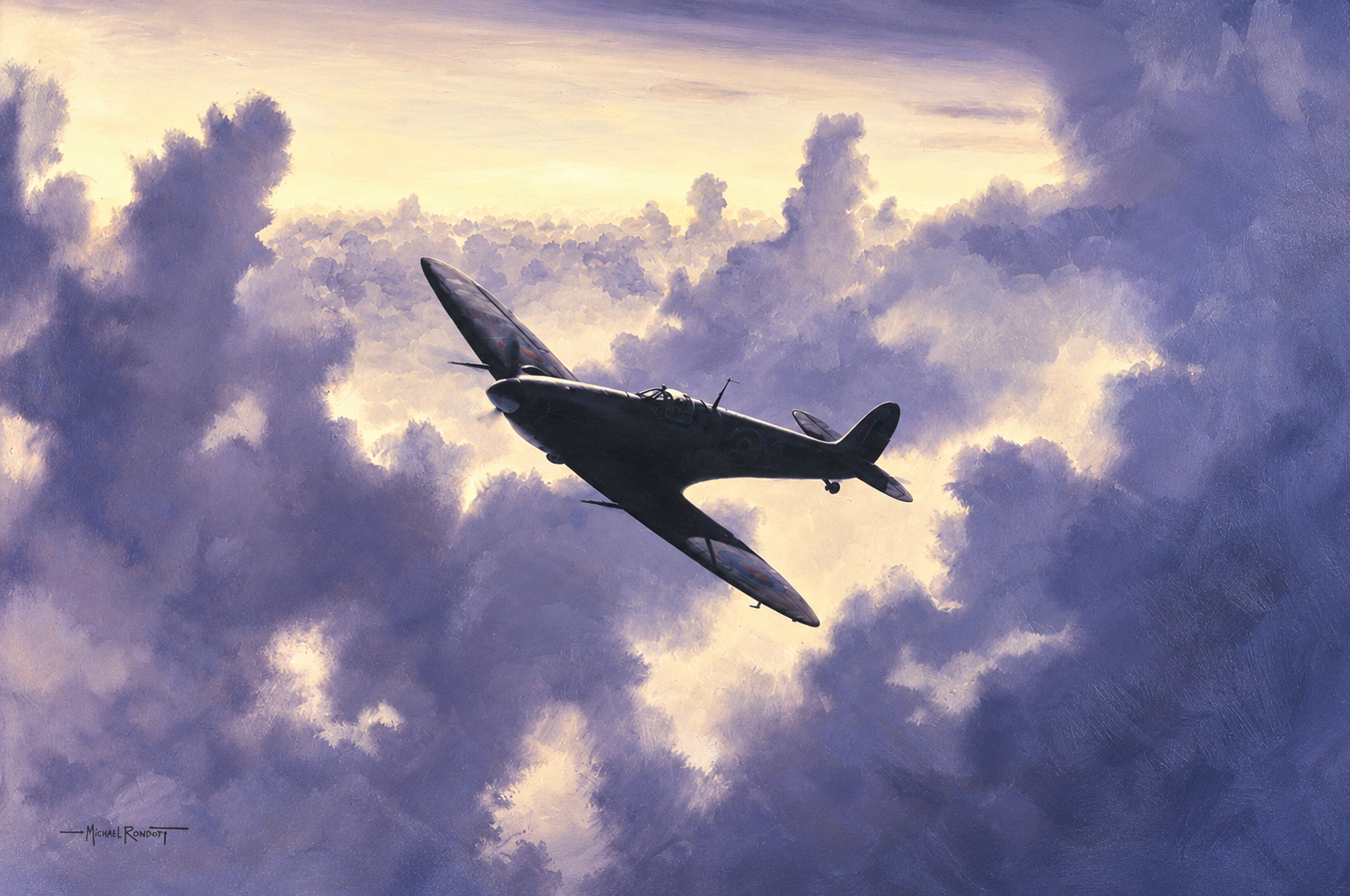
High In The Sunlit Silence

Michael Rondot’s commemorative Spitfire painting connects the aircraft’s wartime history with the continuing tradition of remembrance.

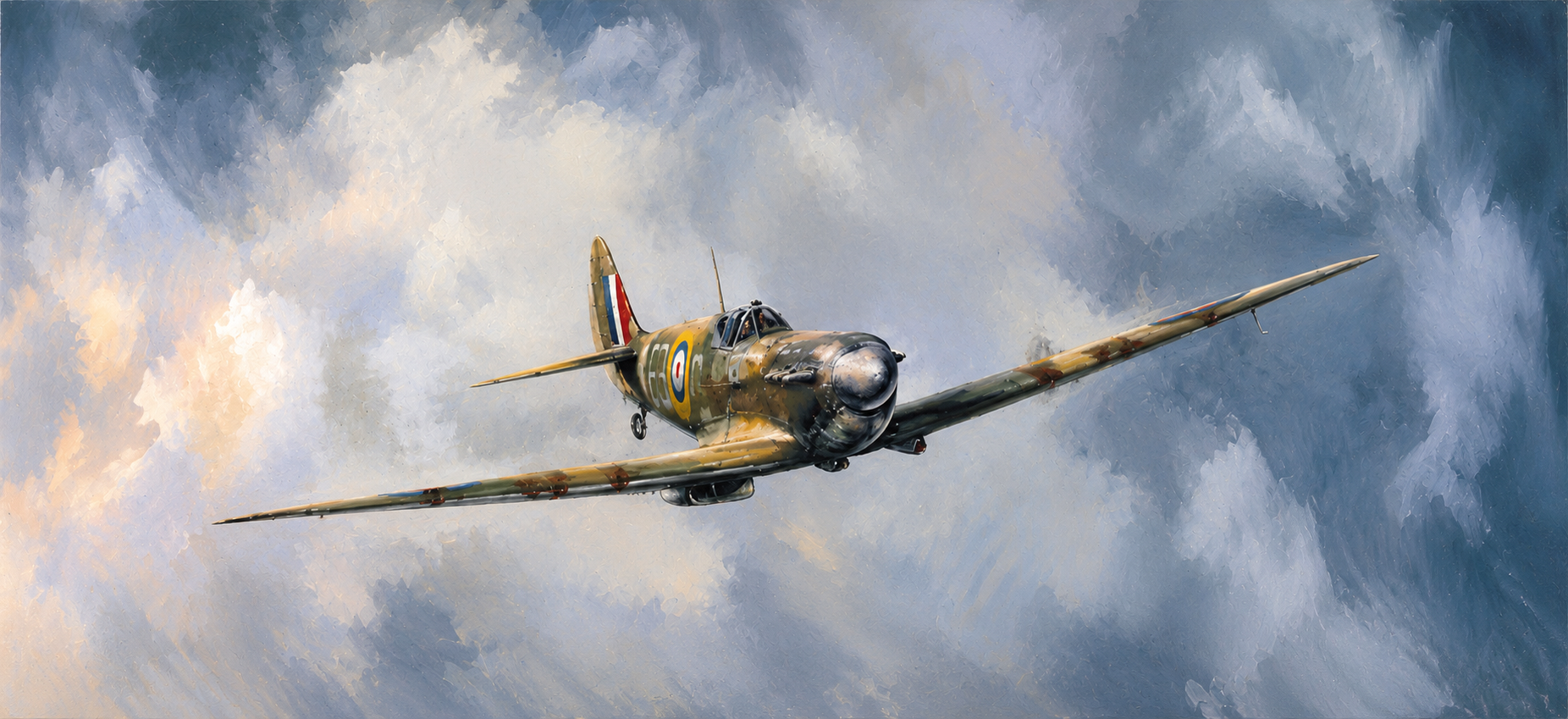
Spitfire

Michael Rondot’s Spitfire artwork celebrates the aircraft and the people associated with its enduring reputation.

British WWII fighter taking off from an aircraft carrier at sea, with another ship in the distance and a sunset glow on the water

No Room for Error

Philip E. West depicts Captain Eric ‘Winkle’ Brown launching prototype Seafire Mk 45 TM379 from HMS Pretoria Castle in July 1945 — a pivotal chapter in the aircraft’s naval legacy.

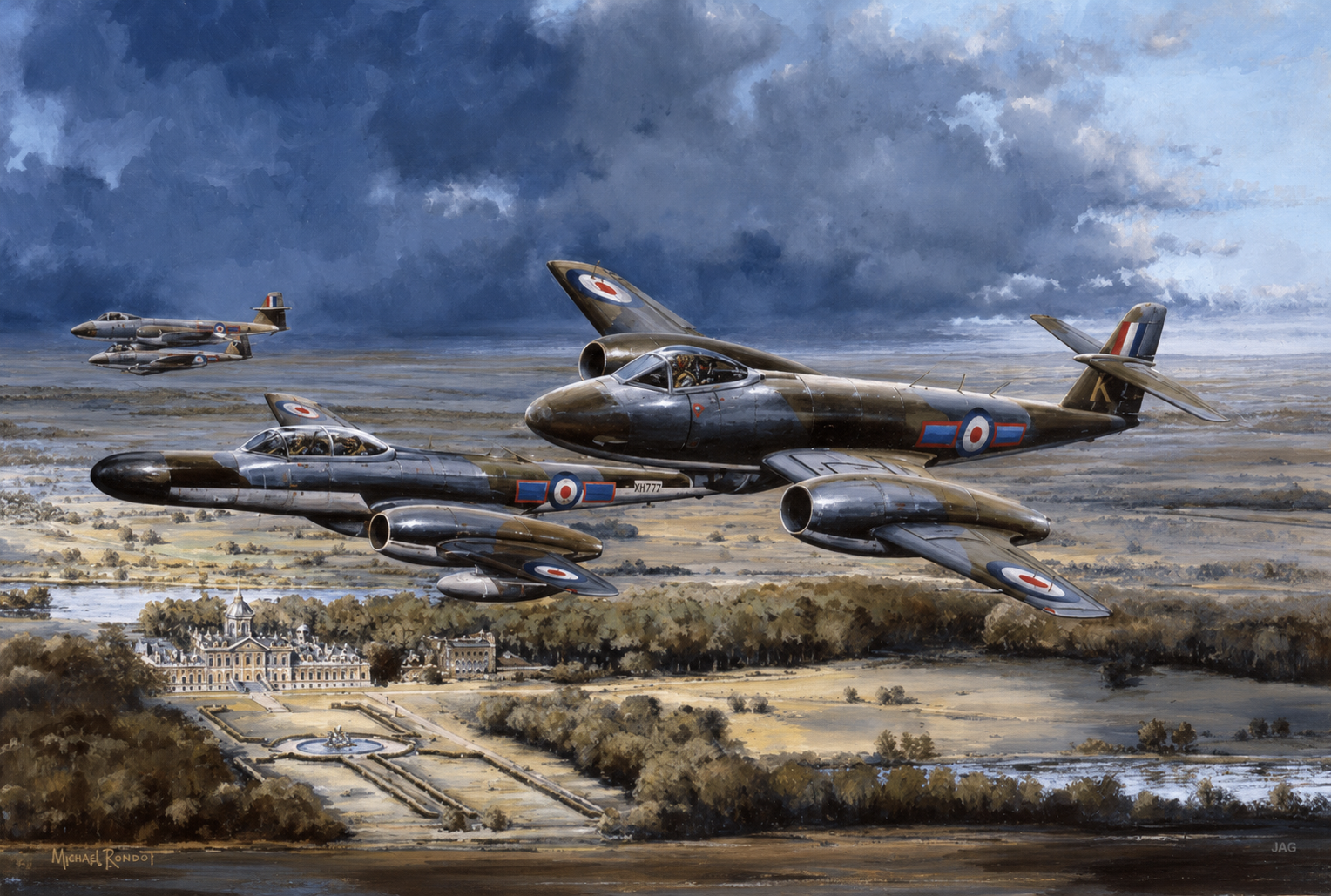
Formation of three RAF jet aircraft with roundels flying over a formal estate and river below, under a stormy blue sky.

Meteors Over Castle Howard

The Gloster Meteor illustrates the early jet era that followed the piston-engined Spitfire.

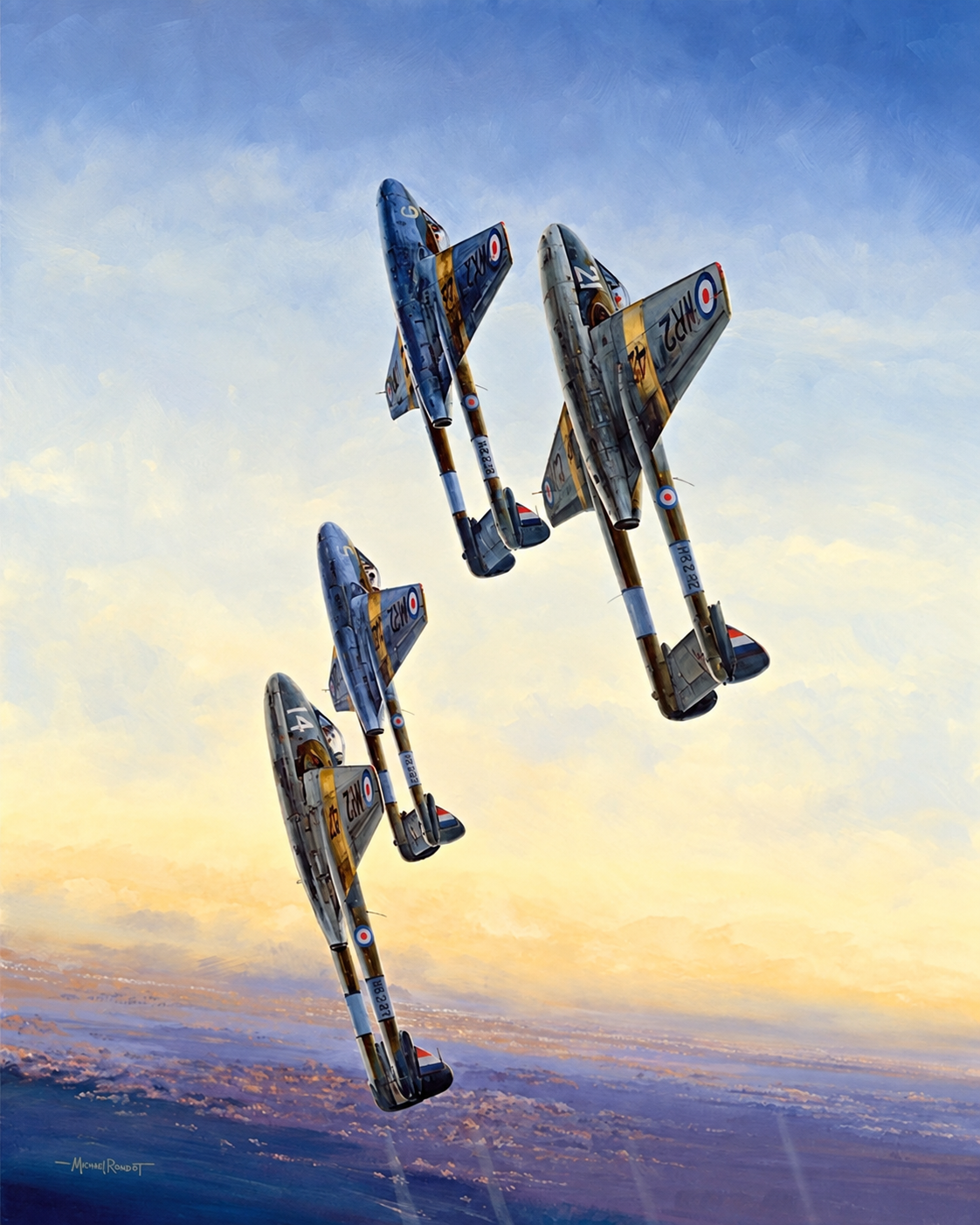
Painting of four WWII-era British fighter planes in formation, silhouetted against a blue-to-sunset sky with RAF roundels on their wings.

Vampire Sunset

De Havilland Vampire fighters represent another important stage in the RAF’s post-war transition to jet aviation.

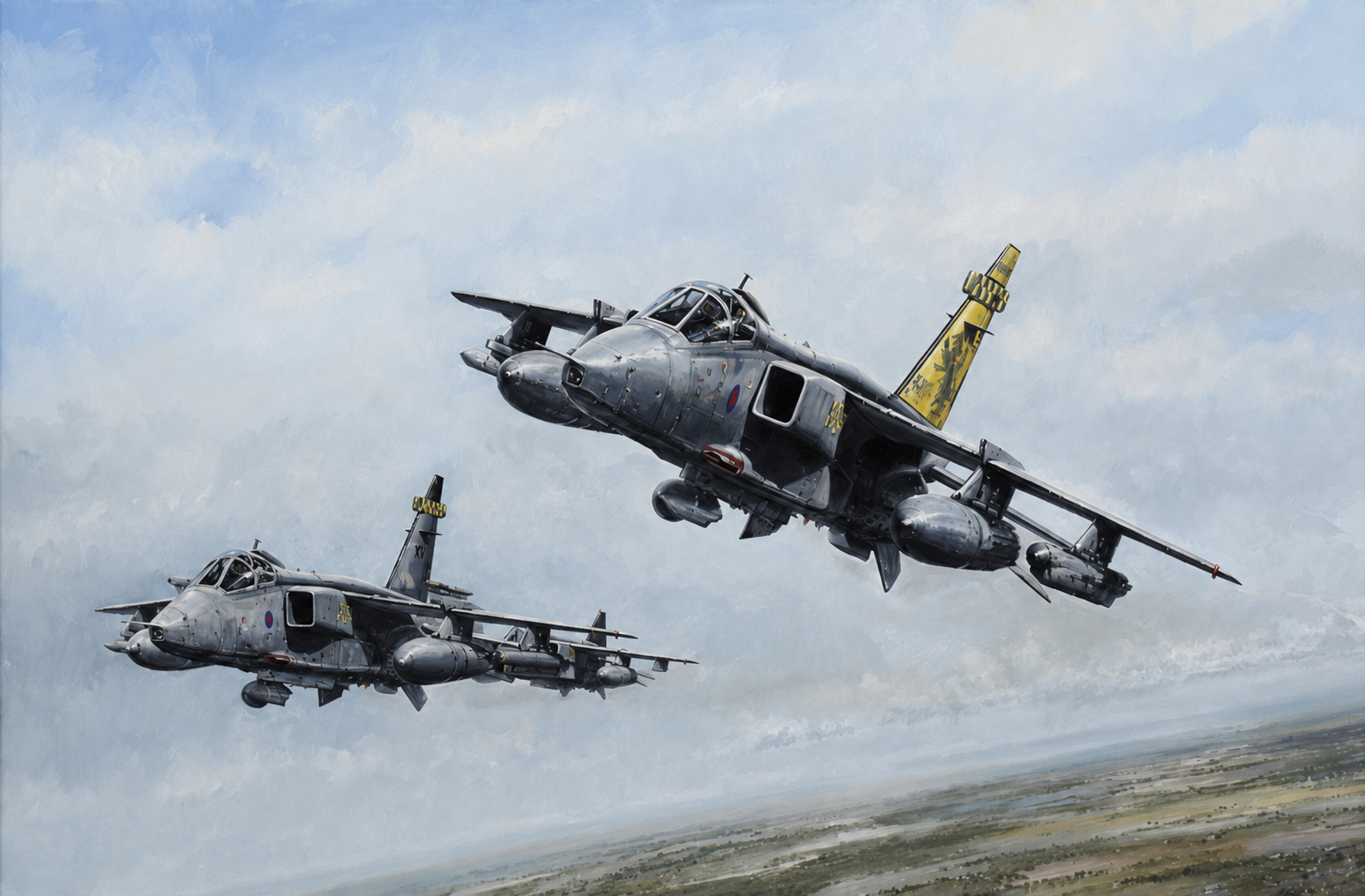
Two gray military jets in formation flying over a flat landscape, with visible payloads mounted under the wings and a bright yellow-tail artwork on the right aircraft.

54 Squadron Farewell

A later RAF squadron story, with selected editions signed by Bob Foster, a Battle of Britain pilot who also flew Spitfires with No. 54 Squadron.