THE SPITFIRE STORY

Four chapters. One extraordinary aircraft.

From the Battle of Britain to the skies over Europe and the flight decks of the Royal Navy, discover the remarkable story of the Spitfire, the people who flew and maintained it, and the legacy they left behind. Told through aviation art, this four-chapter exhibition celebrates one of Britain’s most iconic aircraft.

The National Spitfire Project seeks to honour everyone who contributed to the Spitfire’s extraordinary achievements through a national monument in Southampton, where the aircraft was developed.

Discover the National Spitfire Project

EXPLORE THE FOUR CHAPTERS

A dramatic limited edition print showing Pilot Officer Geoffrey Wellum's Spitfire banking away from a destroyed Ju 88 bomber over the Medway Estuary.

CHAPTER 1: THEIR FINEST HOUR

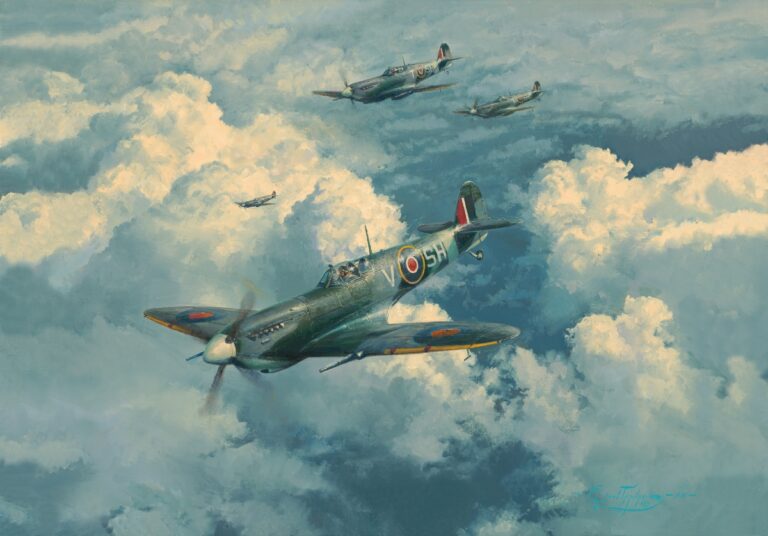
The Battle of Britain · 1940 — The Spitfire and the people who defended Britain’s skies.

RAF fighter aircraft flying in formation against a cloudy sky.

CHAPTER 2: TAKING THE FIGHT

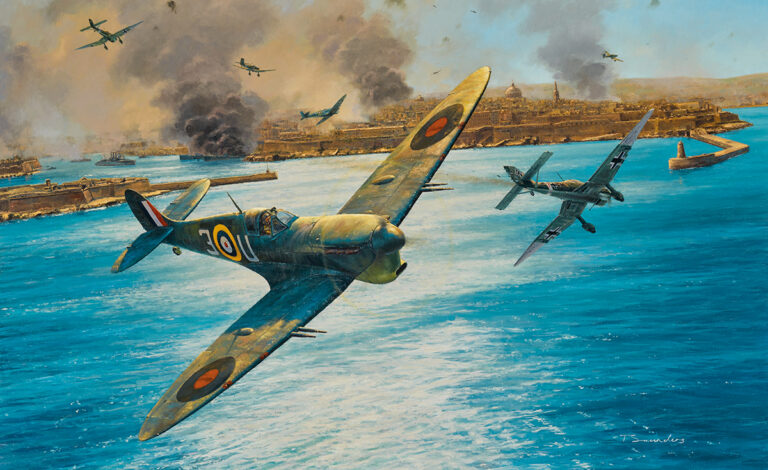
The offensive years · 1941–1943 — From defending Britain to taking the fight across the Channel.

Two fighter aircraft in combat over the sea near Malta.

CHAPTER 3: LIBERATION OF EUROPE

The Allied advance · 1943–1945 — The Spitfire’s contribution from the Mediterranean to Normandy and beyond.

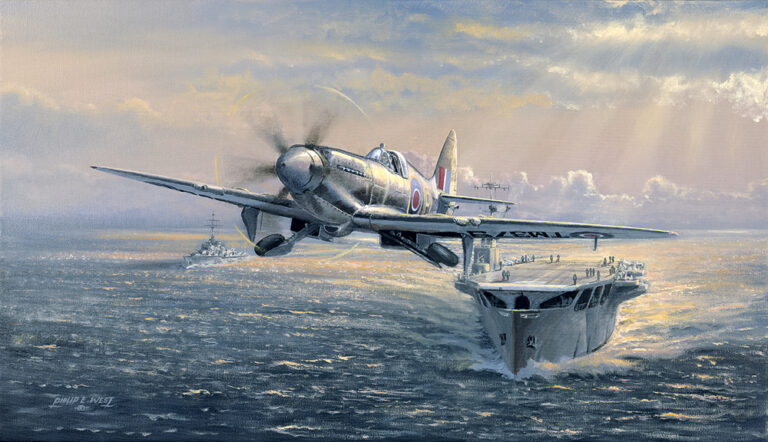
British WWII fighter taking off from an aircraft carrier at sea, with another ship in the distance and a sunset glow on the water

CHAPTER 4: ENDURING LEGACY

After 1945 — The naval Seafire, post-war service and the aircraft’s living heritage.

KEEPING THE SPITFIRE STORY ALIVE

The Spitfire’s legacy is not confined to museums and memorials. The RAF Battle of Britain Memorial Flight (BBMF) maintains and flies historic aircraft, including Spitfires and Hurricanes, honouring those who served and allowing new generations to experience the sights and sounds of wartime aviation.

Navy Wings preserves and shares the history of British naval aviation, including the Seafire — the Spitfire’s carrier-borne descendant. Its work with historic aircraft, archives and public engagement helps keep the Fleet Air Arm’s contribution visible and understood.

Together, these organisations show why preserving both the aircraft and the human stories behind them matters.