
Located next to RNAS Yeovilton in Somerset, the Fleet Air Arm Museum (FAAM) is the primary museum dedicated to the history of naval aviation, preserving the extraordinary stories and machines of the Royal Navy’s air power since 1914. More than just a collection of aircraft, FAAM offers an immersive journey through time, capturing the high-stakes world of flying from the decks of aircraft carriers. This is somewhere that feels like I am coming home having lived on the base. It is an essential destination for anyone interested in naval aviation and the unique challenges faced by the men and women of the Fleet Air Arm (FAA). There is much to see and experience so I have picked 3 highlights that make this museum special.


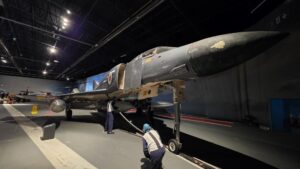
The Carrier Experience is the undisputed Centrepiece of the museum, providing a multi-sensory journey onto the deck of a full-scale replica of the aircraft carrier HMS Ark Royal. This exhibit transports visitors directly into the hectic and high-pressure world of naval operations. Visitors can walk through the carrier’s Ready Room, feel the movement of the deck, and witness a simulated launch and recovery. Crucially, the deck is populated with key aircraft that operated from the Ark Royal, including the massive McDonnell Douglas Phantom FG.1 fighter, the powerful Blackburn Buccaneer S.2 strike jet, and the Fairey Gannet anti-submarine aircraft. It showcases the immense logistical and engineering challenges involved in maintaining air superiority at sea.
Check out our Prints on the:
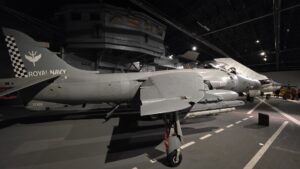


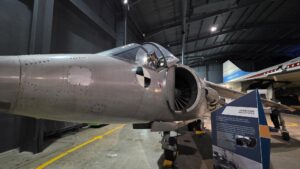
The museum’s collection of Harriers is particularly strong, highlighting the incredible leap in technology represented by the Sea Harrier. This aircraft became a symbol of British engineering ingenuity thanks to its revolutionary Vertical/Short Take-Off and Landing (V/STOL) capability, powered by the unique Rolls-Royce Pegasus engine. Seeing the Sea Harrier up close allows visitors to appreciate the innovative design that allowed it to operate effectively from smaller carriers and ultimately achieve legendary status. The Harrier’s ability to “viff” (Vectoring In Forward Flight) made it a deceptively dangerous dogfighter, overcoming its subsonic speed limitations.
Check out our Harrier Prints: Harrier Prints
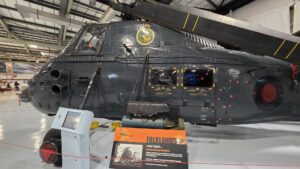
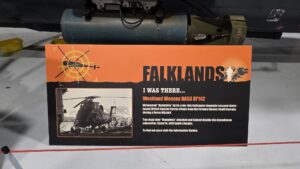
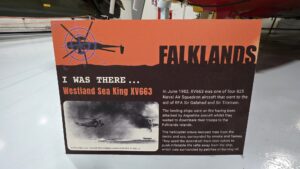

The FAAM houses a dedicated and poignant exhibit on the 1982 Falklands War, a conflict that remains the defining moment of the modern Fleet Air Arm. This section focuses on the crucial role played by the Sea Harrier FRS.1 and the pilots of the two deployed carriers, HMS Hermes and HMS Invincible. The exhibit features artifacts, personal accounts, and aircraft that took part in the conflict, detailing the immense logistical effort of the Task Force and the critical air battles. It highlights how the FAA, against the odds, secured air superiority over the islands, demonstrating the strategic necessity of carrier-borne air power. I wanted to pay specific tribute to two Helicopters that actually took part in the conflict:
Westland Sea King XV663: From 825 Squadron and involved in the rescue of injured soldiers following the bombing of the RAF Sir Galahad and Sir Tristram. They used their rotors downdraft to blow the life rafts away from the ships
Westland Wessex XP142: Better known as Humphrey that was deployed on the County Class Destroyer HMS Antrim. As the flagship of the operation to retake South Georgia Antrim was heavily involved as was her famous Wessex.
HMS Antrim and Humphrey were “lucky” On the 21st May Antrim was hit by a 1000lb bomb but it did not explode. In addition Humphrey was damaged by strafing along with some of her crew.
The Fleet Air Arm Museum provides not only a showcase of military aviation hardware but also a powerful tribute to the courage and skill required to launch powerful aircraft and helicopters from a small, pitching deck in the middle of the ocean.
For more information visit: Fleet Air Arm Museum
