JET ART GALLERY / THE SPITFIRE STORY
1941–1943. The Spitfire moves beyond Britain’s shores as Fighter Command carries the air war across the Channel and into occupied Europe.
Explore the changing missions, the pilots who flew them and the art that remembers this demanding chapter.
After the Battle of Britain, Fighter Command began taking the war across the English Channel. From 1941, Spitfire squadrons mounted offensive patrols over occupied France, seeking to draw German fighters into combat and protect RAF bombers attacking targets on the continent.
These operations brought new challenges. Pilots flying beyond the English coast had less fuel in reserve, limited warning of enemy aircraft and little prospect of rescue if forced down inland. Small low-level attacks known as Rhubarbs and larger Circus operations demanded careful navigation, formation discipline and close cooperation between fighters and bombers.
The Spitfire Mk V became a mainstay of these operations, but the arrival of the formidable Focke-Wulf Fw 190 exposed its weaknesses. The Merlin-powered Mk IX, introduced in 1942, helped restore competitiveness. Behind each sortie stood armourers, mechanics, controllers and ground crews whose work made repeated operations possible.
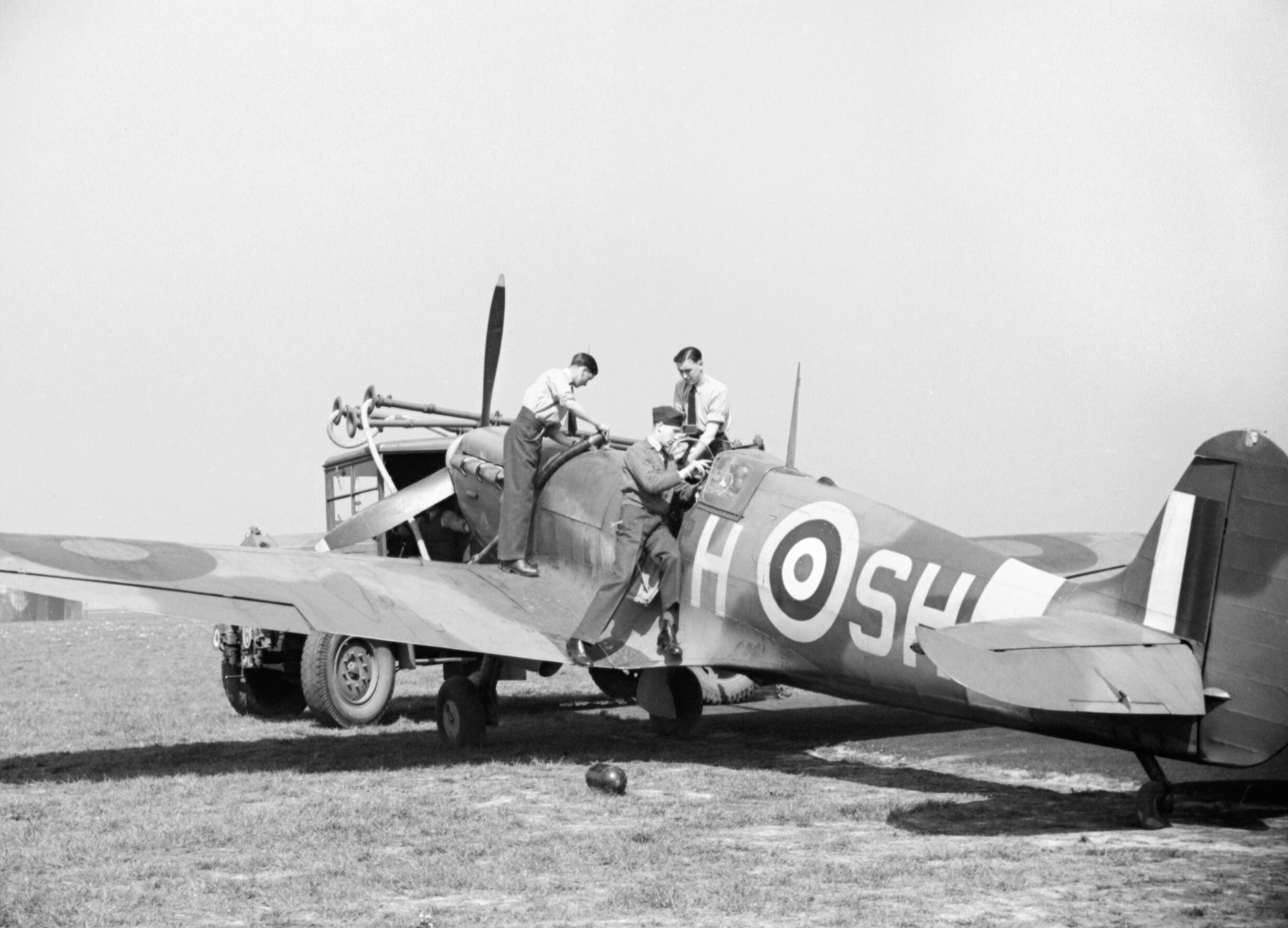
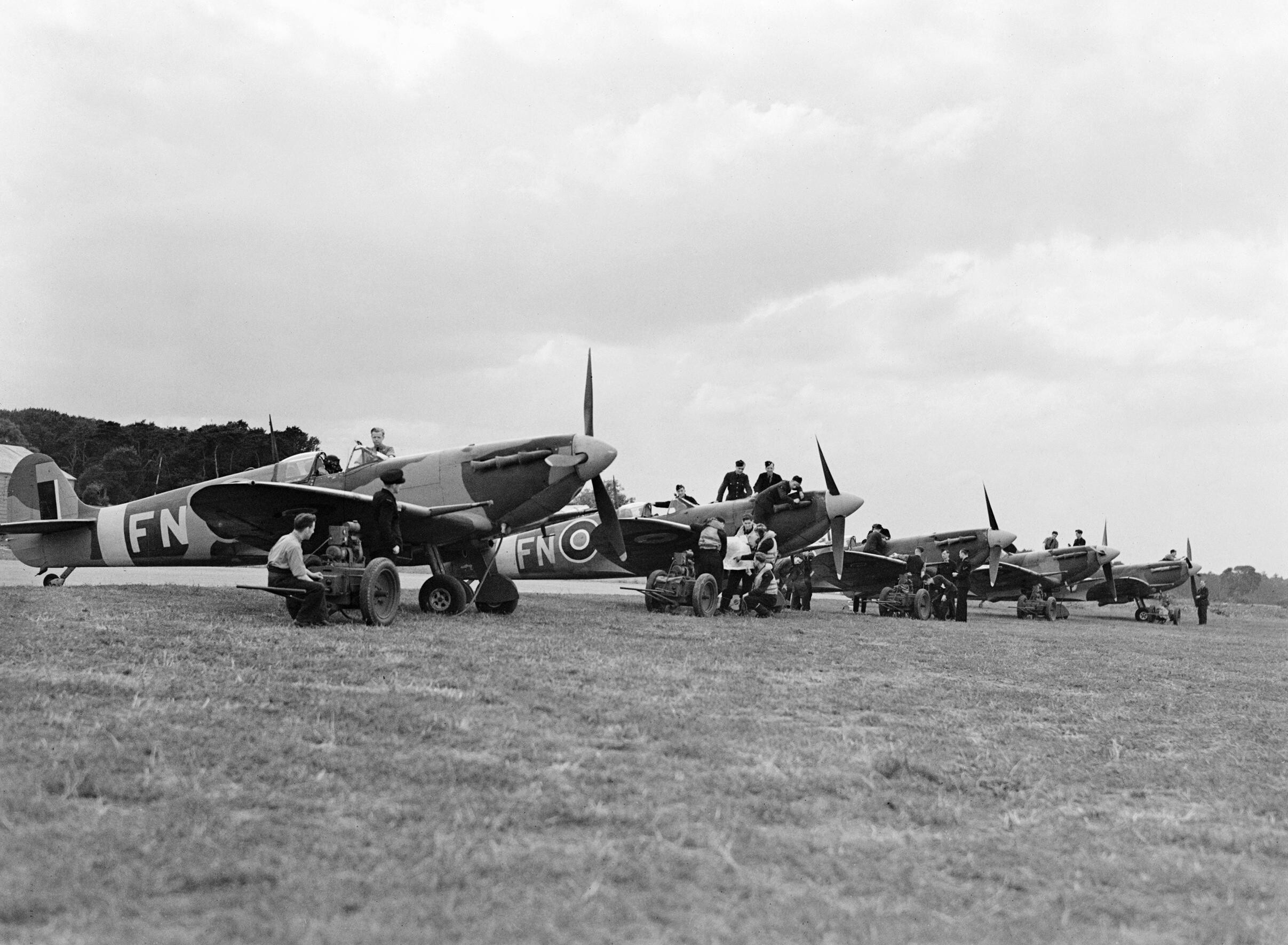
Ground staff refuel a No. 64 Squadron Spitfire Mk VB at RAF Hornchurch on 7 May 1942, readying the aircraft for another offensive sortie. Air Ministry official photograph, IWM CH 5772.
The move from defence to offence changed the daily experience of RAF fighter pilots. Instead of waiting for an incoming raid, squadrons crossed the coast in formations that could be seen and intercepted by German radar and fighters. The journey home could be as dangerous as the outward flight, especially when fuel was low or weather deteriorated.
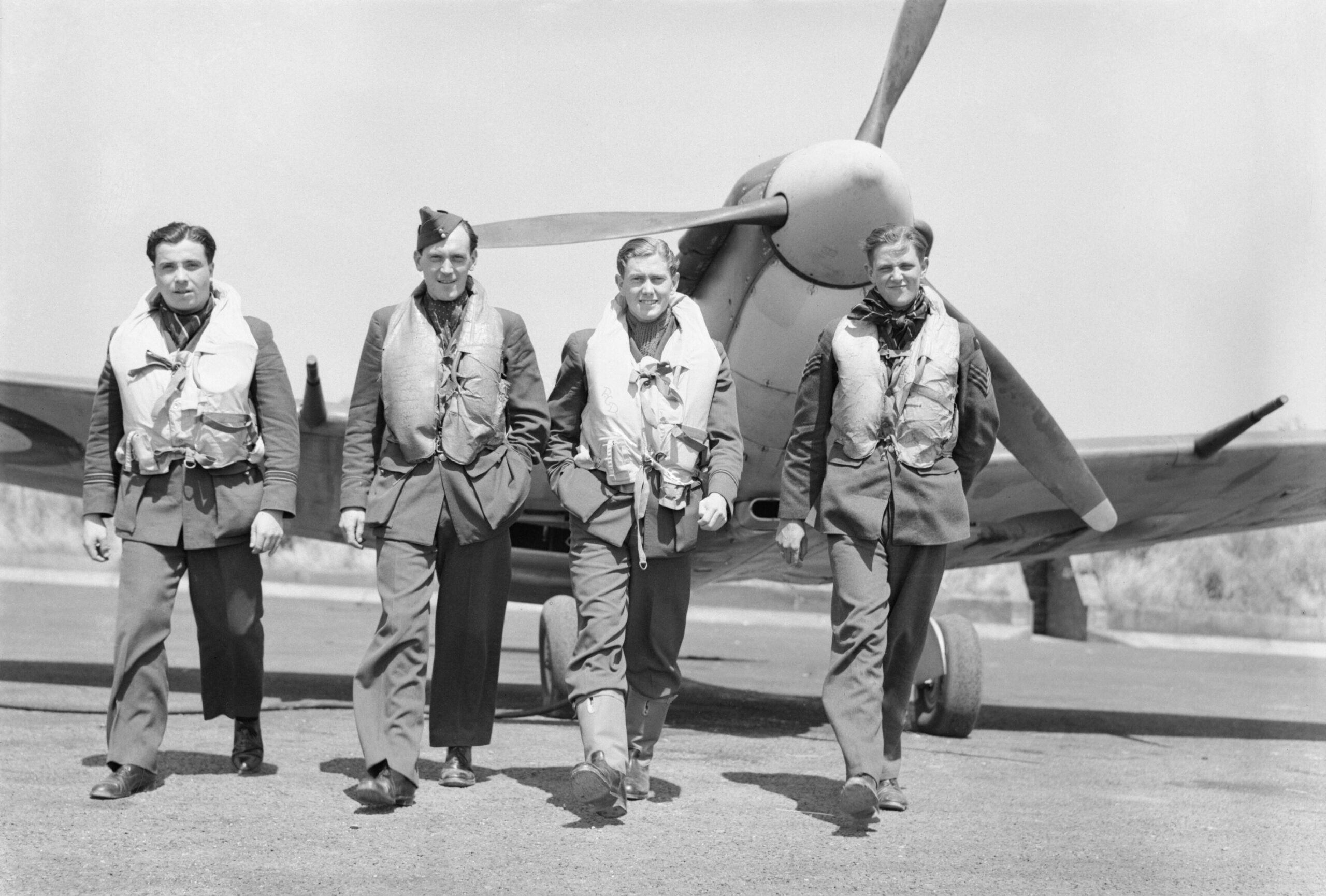
At RAF Hornchurch in July 1941, pilots of No. 611 Squadron were photographed after returning from a sweep over France. Their experience illustrates the strain of repeated offensive operations, where an apparently routine sortie could quickly become a fight for survival.
Circus missions paired small bomber formations with fighter escorts, while Rhubarb patrols sought targets of opportunity in poor visibility. Both required judgement: pressing on might achieve the objective, but could leave a damaged aircraft unable to reach Britain.
The arrival of the Fw 190 in 1941 challenged the Spitfire Mk V. British designers and engineers responded with the Mk IX, initially conceived as an interim solution but destined to become one of the most important wartime Spitfire variants.
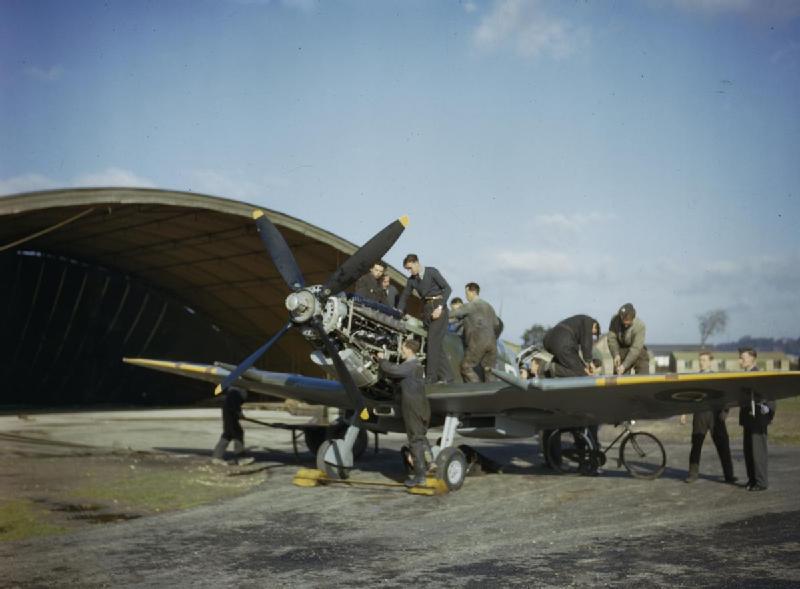
Photographs of an engine overhaul at Fairlop in November 1942 reveal the demanding technical work behind this improvement. Fitters and mechanics inspected engines, repaired battle damage and prepared aircraft to fly again, often within hours of their return.
Pilots depended on this expertise as much as on their own flying skill. Squadron efficiency was measured not simply by the number of aircraft on strength but by how many could be made serviceable for the next operation.
Offensive sorties over occupied Europe carried a particular human cost. A pilot who survived combat might still be lost through engine failure, navigational error or fuel exhaustion; those who came down on land faced capture and an uncertain future.
By 1943, Allied air operations were expanding in scale and purpose. The Spitfire continued to provide fighter cover, reconnaissance and local air superiority while other types took on increasingly long-range escort duties. The evolution from defensive interception to sustained offensive action set the stage for the liberation campaigns that followed.
The paintings in this chapter capture the movement, tension and drama of these sorties. Contemporary photographs restore the wider story: aircraft in the air, the people who maintained them, and the men who did not return.
Archival photographs: Air Ministry Second World War Official Collection, Imperial War Museums CH 5772 (Hornchurch), CH 3056 (No. 611 Squadron pilots) and TR 516 (Fairlop). All three photographs date from 1941–1942.
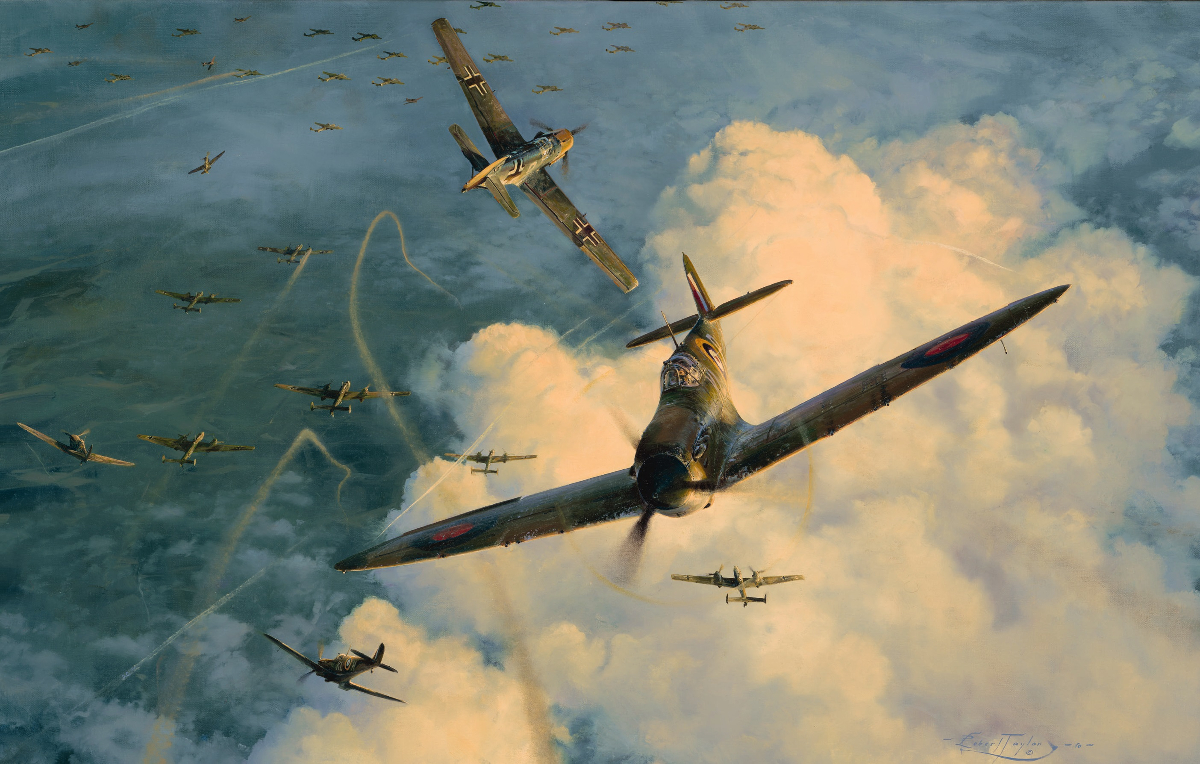
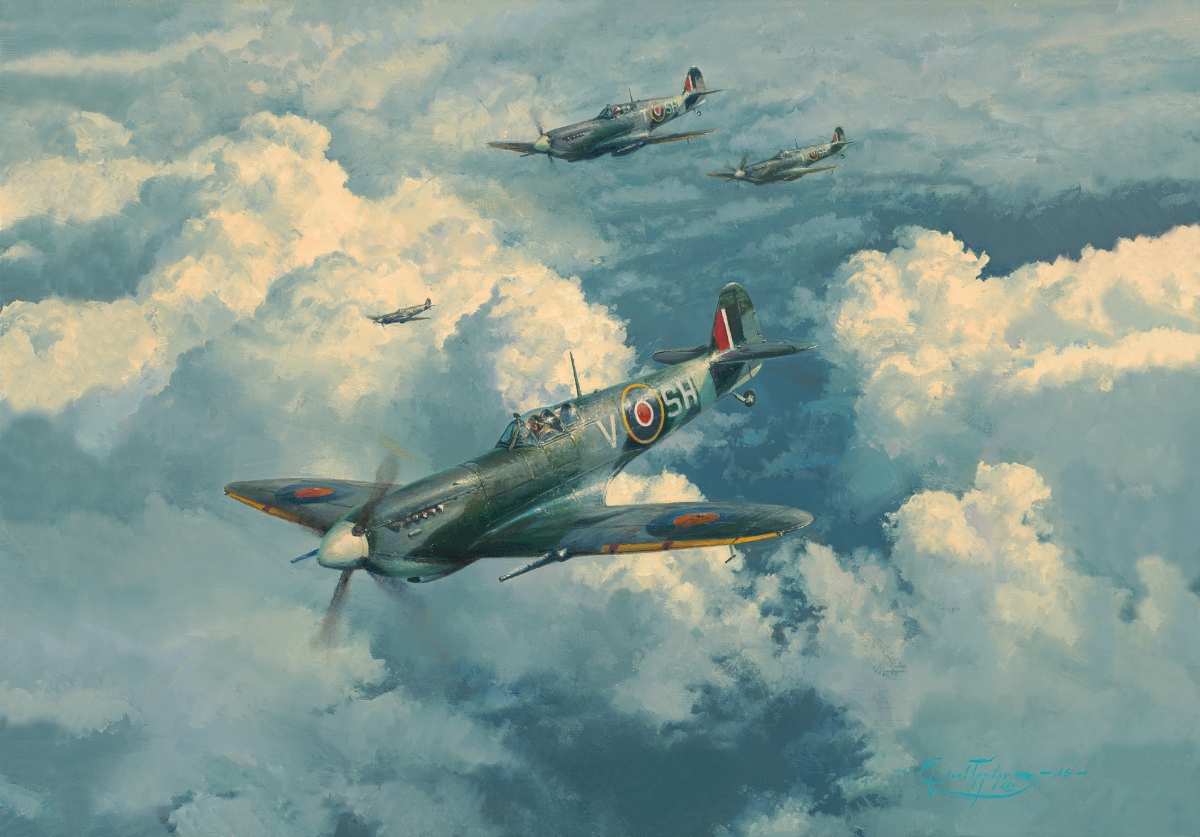
Taking the fight to the enemy. Robert Taylor’s Top Bounce evokes the speed, danger and split-second decisions faced by Spitfire pilots as the RAF carried offensive operations across the Channel.
The painting reflects the changing nature of the air war and the demands placed on fighter squadrons during the offensive years.
Explore a curated selection of Spitfire paintings reflecting the changing air war from 1941 to 1943, from cross-Channel sweeps to the demanding work of fighter pilots and their squadrons.
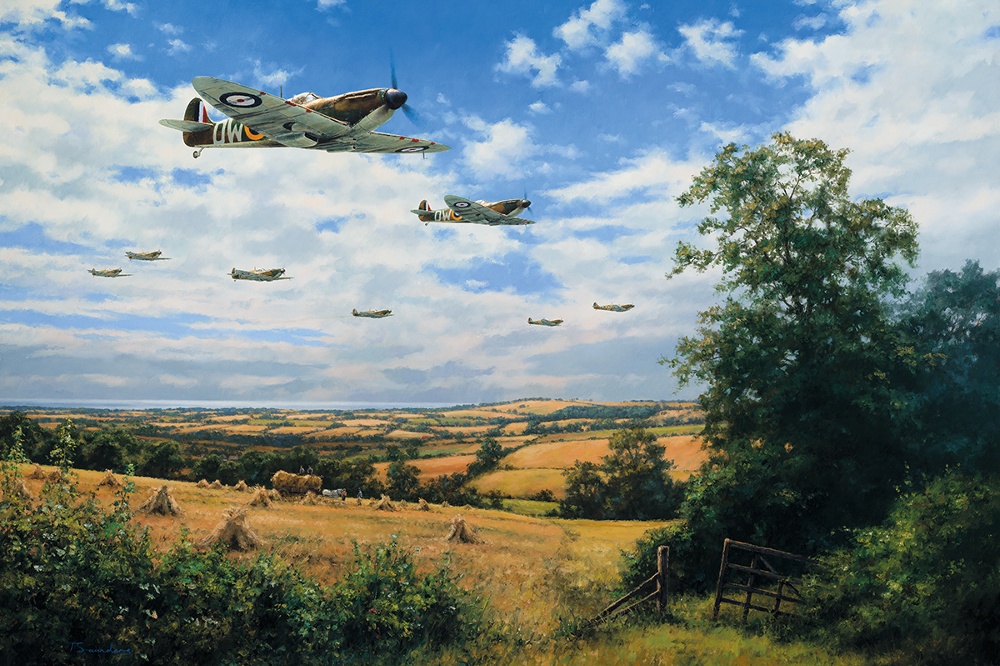
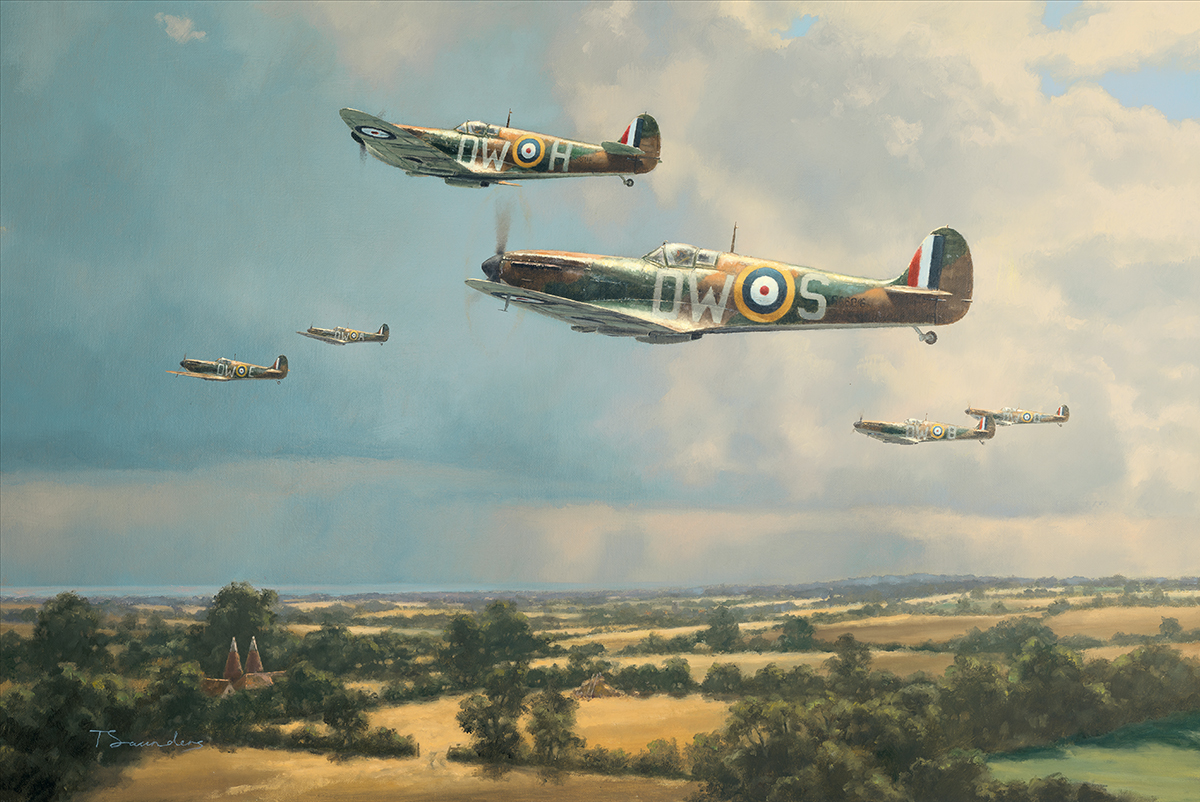
Anthony Saunders depicts RAF fighters in the skies above the countryside, evoking the pressure and uncertainty of wartime operations.
Robert Taylor’s fighter aviation artwork recalls the rapid decisions and manoeuvres demanded by aerial combat.
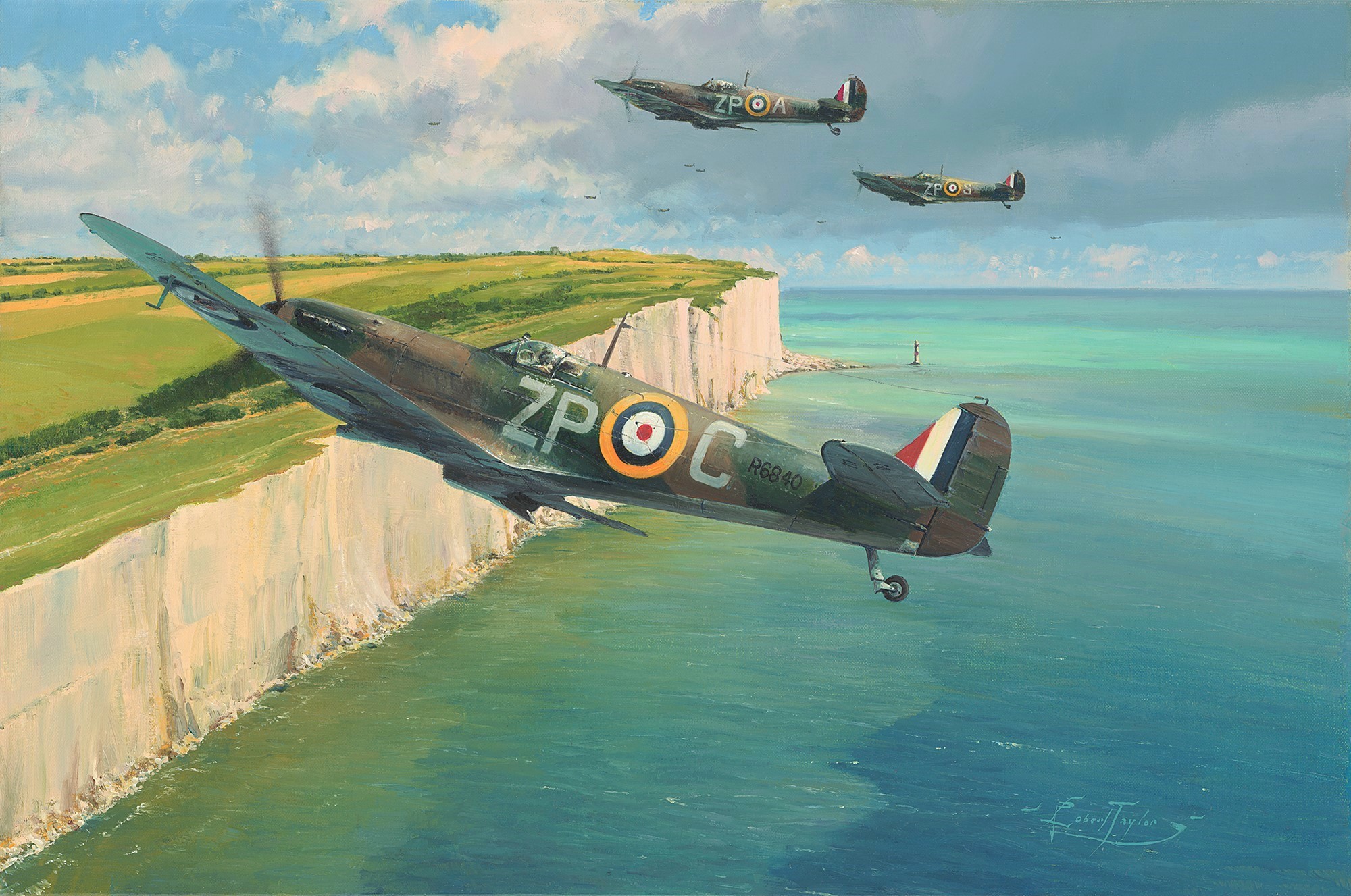
Robert Taylor portrays Spitfires over the coastline, a reminder of the Channel as both a frontier and a route into occupied Europe.
Robert Taylor’s dramatic aerial combat scene reflects the skill and determination demanded of wartime fighter pilots.
Anthony Saunders captures the return from a sortie, when the hope of reaching home was never taken for granted.
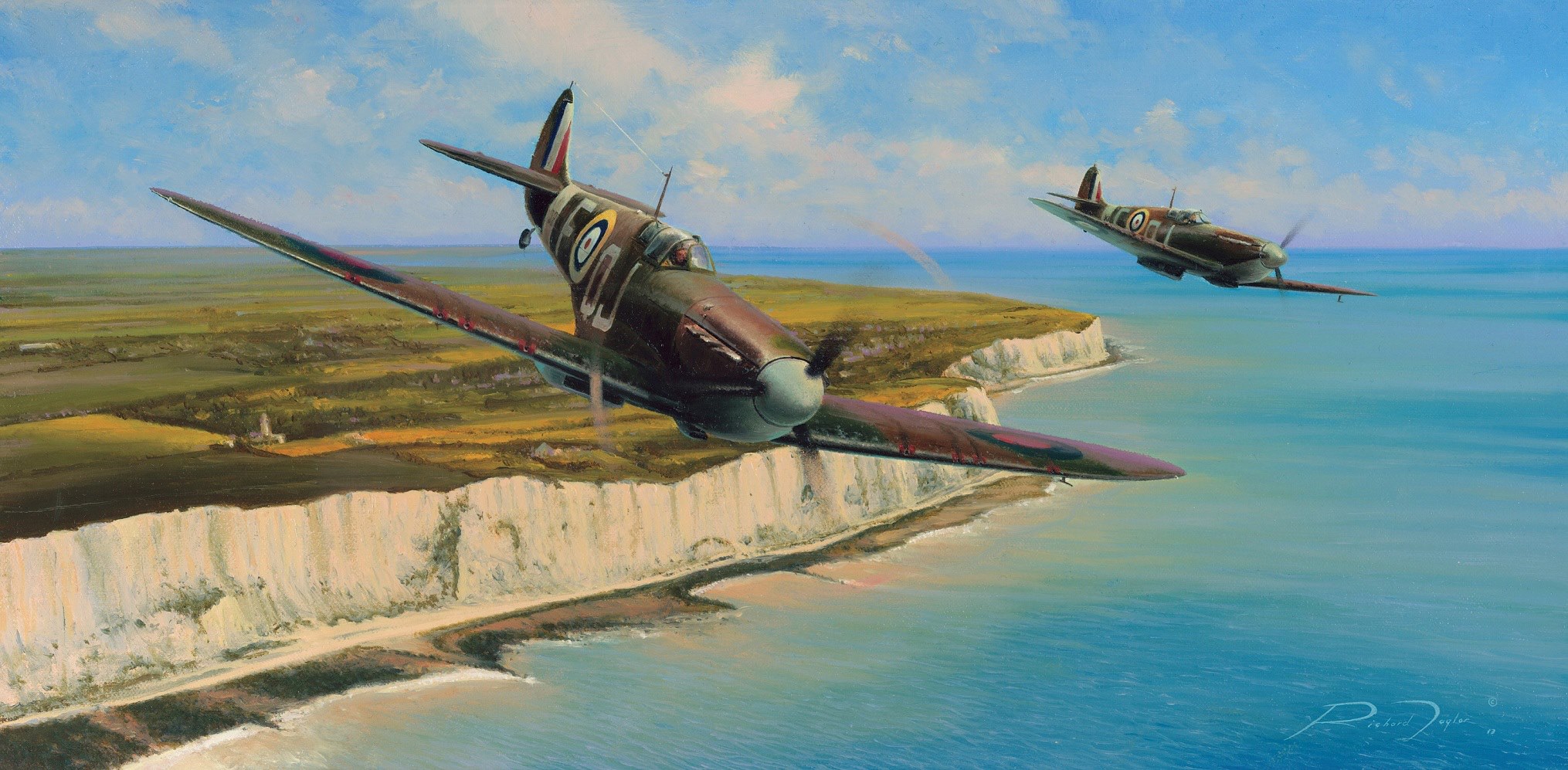
A second interpretation of the Channel skies, this time by Richard Taylor, depicting two Spitfires near the coast.