
Two generations of naval aviators, from wartime Seafires to the Falklands Sea Harrier and beyond.
In October 2026, JET Art Gallery had the pleasure of speaking with Lt Cdr David Morgan DSC, known as “Mog”, about a flying career spanning military and commercial aviation. His story also reaches back to his father, Lt(A) Ivor H. S. Morgan RNVR—“Moggy Senior”—a Fleet Air Arm Seafire pilot during the Second World War. Together their experiences connect two generations of British naval aviation.
Ivor Morgan served with 894 Naval Air Squadron. As David explained, his father was credited with three aerial victories: a Messerschmitt Bf 110 over France, a Mitsubishi G4M “Betty” bomber, and a shared victory against a Kawanishi H8K “Emily” flying boat in the Far East. The Seafire, adapted from the Spitfire for carrier operations, demanded precision and courage from its pilots.
David shared a particularly personal discovery. A couple of years after his father’s death, he found two Seafire sorties recorded as “North of Bodo” in Ivor’s flying logbook. Those entries enabled him to claim his father’s Arctic Star. The episode is a reminder of how much family history can be preserved in a pilot’s logbook.
Despite a serious heart condition in his youth, David pursued a flying career, initially with the Royal Navy and later with the RAF. His flying included helicopters and the Harrier GR3. By the time of the Falklands conflict, he was converting to the Sea Harrier, an aircraft whose carrier-based capabilities would prove crucial in the South Atlantic.
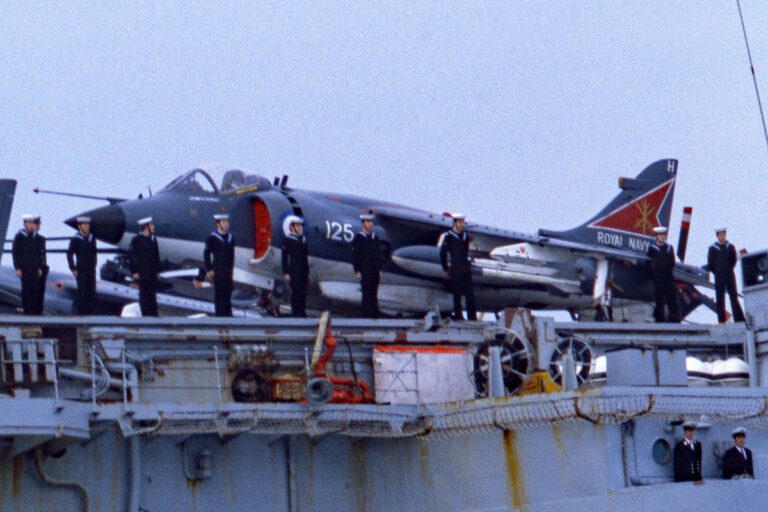
In 1982, David was an RAF Flight Lieutenant attached to 800 Naval Air Squadron aboard HMS Hermes. He flew 50 operational sorties during the conflict. On 8 June, he shot down two Argentine A-4 Skyhawks, then faced a perilous return to the carrier with critically low fuel. He was awarded the Distinguished Service Cross for his service. He later recounted his experiences in his memoir, Hostile Skies.
One of the most dramatic episodes of David Morgan’s Falklands service took place on 1 May 1982, when nine Sea Harriers of 800 Naval Air Squadron attacked Port Stanley airfield. David, then an RAF Flight Lieutenant, was the last aircraft to make its attack. With the airfield’s defences fully alert, he approached at extremely low level. His aircraft was struck by 20 mm anti-aircraft fire, but he escaped at less than 30 feet above the runway and returned safely to HMS Hermes. Afterwards, the engineering crew cut out the damaged section of the aircraft’s fin, preserving the hole left by the enemy fire, and mounted it on a plaque. David still keeps this remarkable memento in his study today—a tangible reminder of just how close that mission came to disaster.
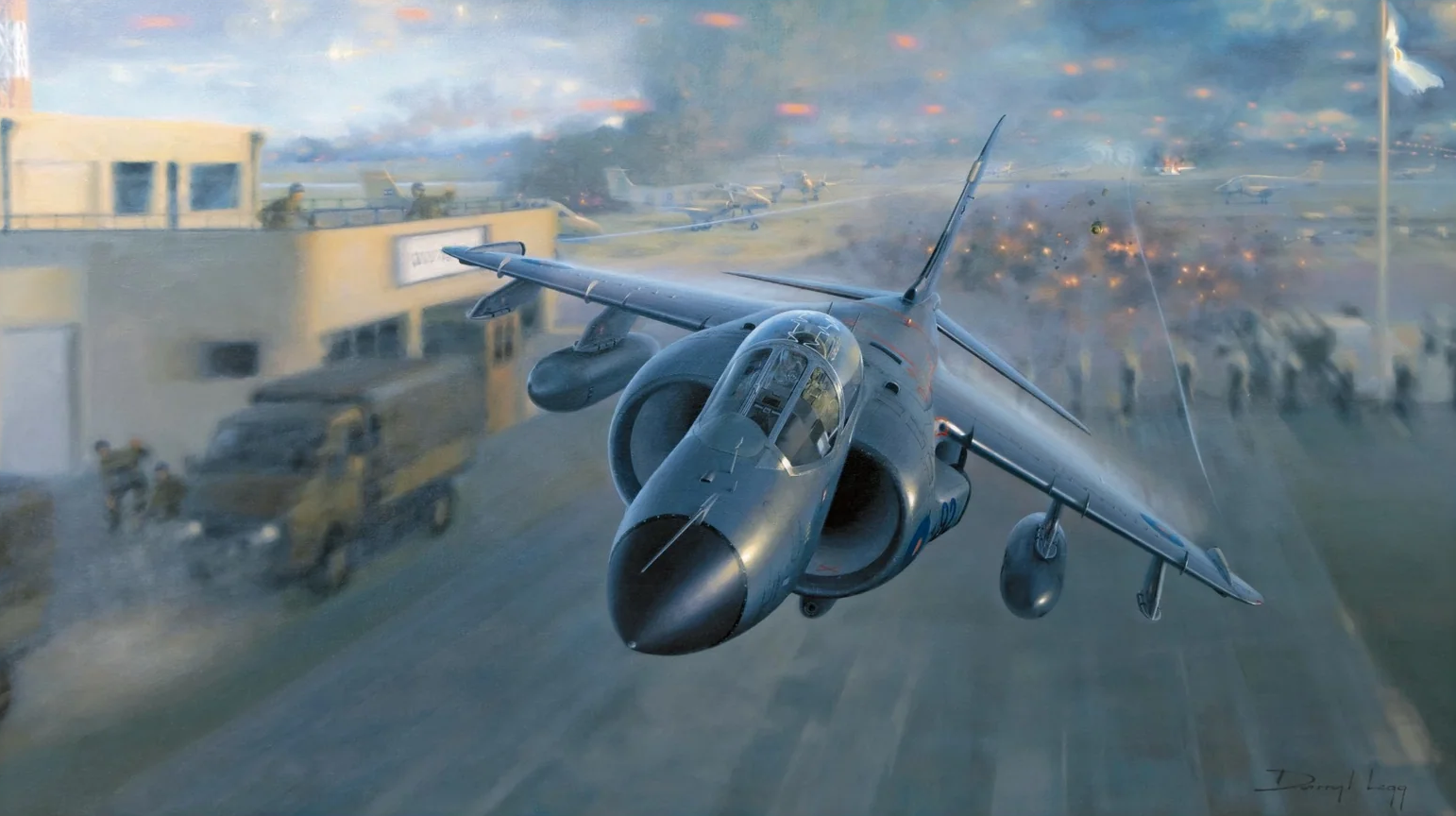
Darryl Legg’s Last Man In captures the speed, danger and extraordinary flying skill of that escape. The limited edition comprises 300 prints, each individually signed by David Morgan. The incident should not be confused with his separate air-to-air combat on 8 June 1982.
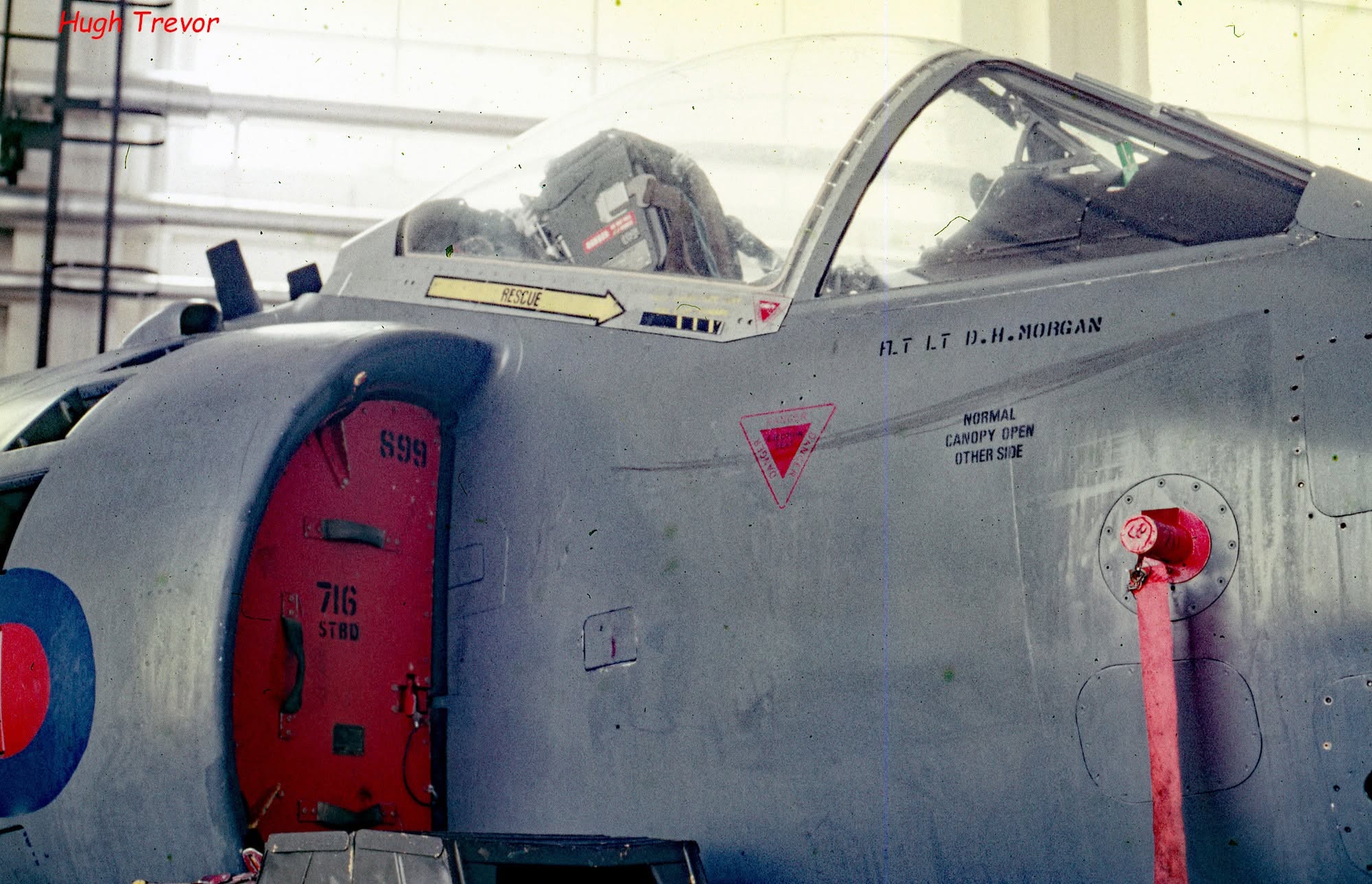
Five weeks after the raid on Port Stanley, David Morgan faced another defining moment of the Falklands air campaign. On 8 June 1982, flying a Sea Harrier on combat air patrol with fellow pilot David Smith, he intercepted Argentine A-4 Skyhawks near Choiseul Sound. The Argentine aircraft had been attacking British forces and shipping around the islands. In the ensuing engagement, Morgan shot down two Skyhawks with Sidewinder missiles; Smith destroyed a third.
The danger did not end when the fighting stopped. Morgan’s Sea Harrier was critically short of fuel, and the return to HMS Hermes became a race against the aircraft’s remaining endurance. He conserved fuel as he made his way back to the carrier and landed with a margin later estimated at only around 90 seconds of flying time.
These events were part of a demanding operational campaign in which Morgan flew repeated missions from HMS Hermes. His award of the Distinguished Service Cross recognised his courage and contribution to the Task Force’s air defence. The official citation records 50 operational sorties and two enemy aircraft shot down. For David’s own account of the 8 June engagement, see “Sea Harrier Over the Falklands — The Final Engagement”.
Last Man In portrays the earlier 1 May attack on Stanley, not this later air-to-air engagement. Together, the two episodes convey the dangers David faced both over the islands and on the journey back to his carrier.
Many years after the conflict, David met Pablo Bolzán, whose father Danilo had died during the fighting on 8 June 1982. In 2018, David accompanied Pablo to the Falkland Islands, where they placed a memorial in his father’s memory. David mentioned meeting Pablo during our conversation. Their story adds a profoundly human dimension to the history of the conflict, without presuming to speak for either man’s private feelings.
After leaving military service, David joined Virgin Atlantic, where he flew for 19 years. His final trip was a Christmas service to Montego Bay. On the return flight, Denmark’s then Prime Minister, Helle Thorning-Schmidt, was aboard. David told her it would be his last Boeing 747 landing and joked that he hoped he didn’t screw it up. She laughed: “So do I!” It was a memorable conclusion to his airline career—but not to his passion for flying.
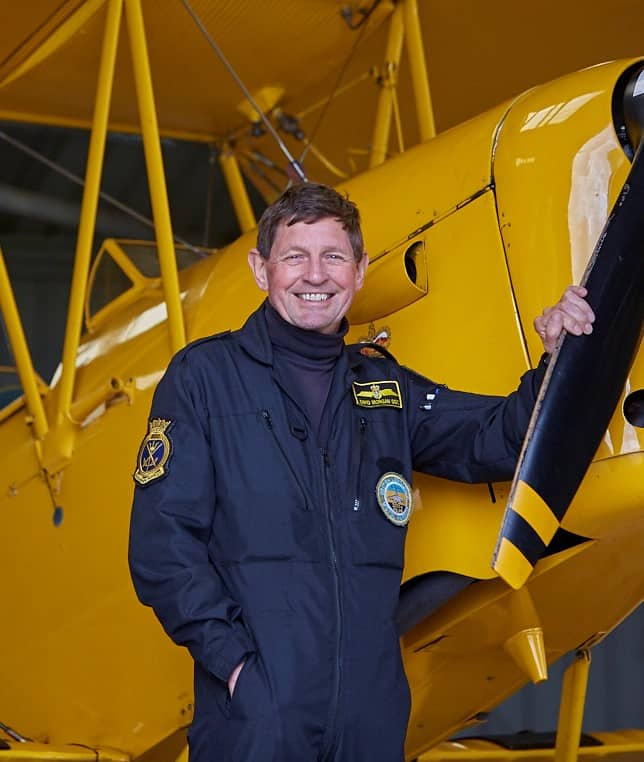
David’s love of aviation continued beyond his 19 years with Virgin Atlantic. A 2021 profile in The Blackmore Vale, “Tiger in the Sky”, describes him flying a distinctive yellow de Havilland Tiger Moth from Compton Abbas Airfield in Dorset and teaching aerobatics. From wartime Sea Harriers and transatlantic Boeing 747s to the open cockpit of a vintage biplane, the variety of aircraft in David’s flying life is extraordinary. The article documents his Tiger Moth flying in 2021; his present-day flying activity remains to be confirmed.
From Ivor Morgan’s Seafire operations to David’s Sea Harrier service and subsequent airline career, the Morgan family story captures the people behind the aircraft. At JET Art Gallery, we believe aviation art can help keep these histories alive. We thank David for sharing his recollections with us.