JET ART GALLERY   /   THE SPITFIRE STORY

LIBERATION OF EUROPE

1943–1945. From the defence of Malta and the advance through Sicily and Italy to the Normandy landings and the final battles over Europe, the Spitfire supports the Allied return to the continent.

Follow the changing front line, the pilots and ground crews who sustained it, and the paintings that preserve their story.

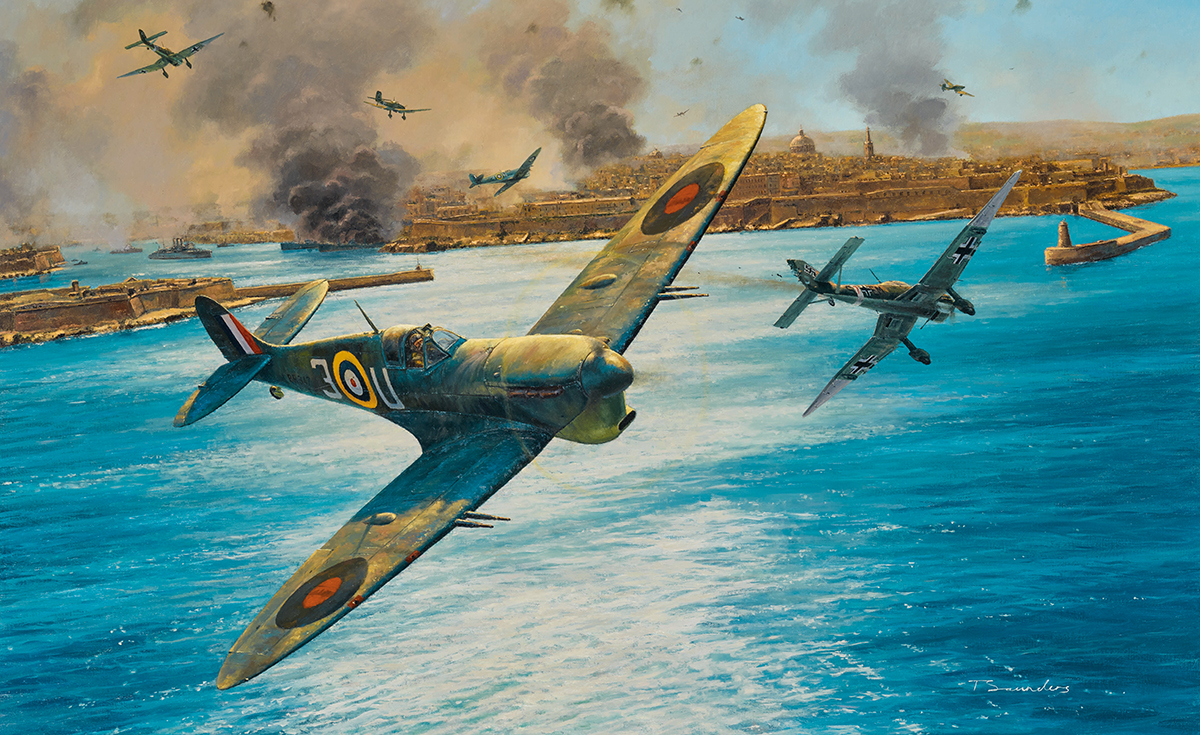
Two fighter aircraft in combat over the sea near Malta.

THE STORY

From the Mediterranean to the heart of Europe

From 1943, Spitfire squadrons served across a widening Allied battlefield. In the Mediterranean, fighters supported the campaigns in Sicily and Italy; in north-west Europe they would help protect the invasion of Normandy and the advance towards Germany.

The Spitfire’s responsibilities extended well beyond aerial combat. Squadrons flew patrols over landing areas, escorted other aircraft, carried out tactical reconnaissance and attacked targets that threatened troops on the ground. Operating from improvised forward airfields placed new demands on pilots and maintenance teams alike.

Different variants adapted to these roles, from the versatile Mk IX to reconnaissance Spitfires equipped with cameras. The aircraft remained effective because the people operating it learned to respond quickly to changing conditions on the ground and in the air.

SPITFIRES IN SICILY — 1943

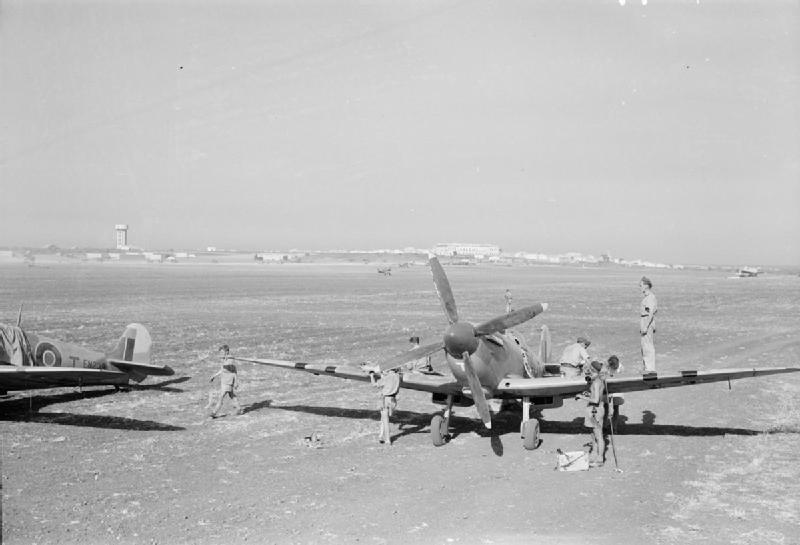
Ground crews working on No. 145 Squadron RAF Spitfire Mk IX aircraft at Pachino Sicily
Ground crews service No. 145 Squadron Spitfire IXs at Pachino, Sicily, 1943. IWM CNA 1013.

RAF ground crews prepare Spitfire fighters at Pachino during the Allied campaign in Sicily. Air Ministry official photograph, IWM CNA 1013.

BEHIND THE MISSIONS

A fighter for a changing battlefield

From the Mediterranean to Italy

The defence of Malta had helped turn the tide in the central Mediterranean. As Allied forces moved onto the offensive, Spitfires provided fighter cover for operations in Sicily and later Italy, often working from dusty airstrips close to the advancing front.
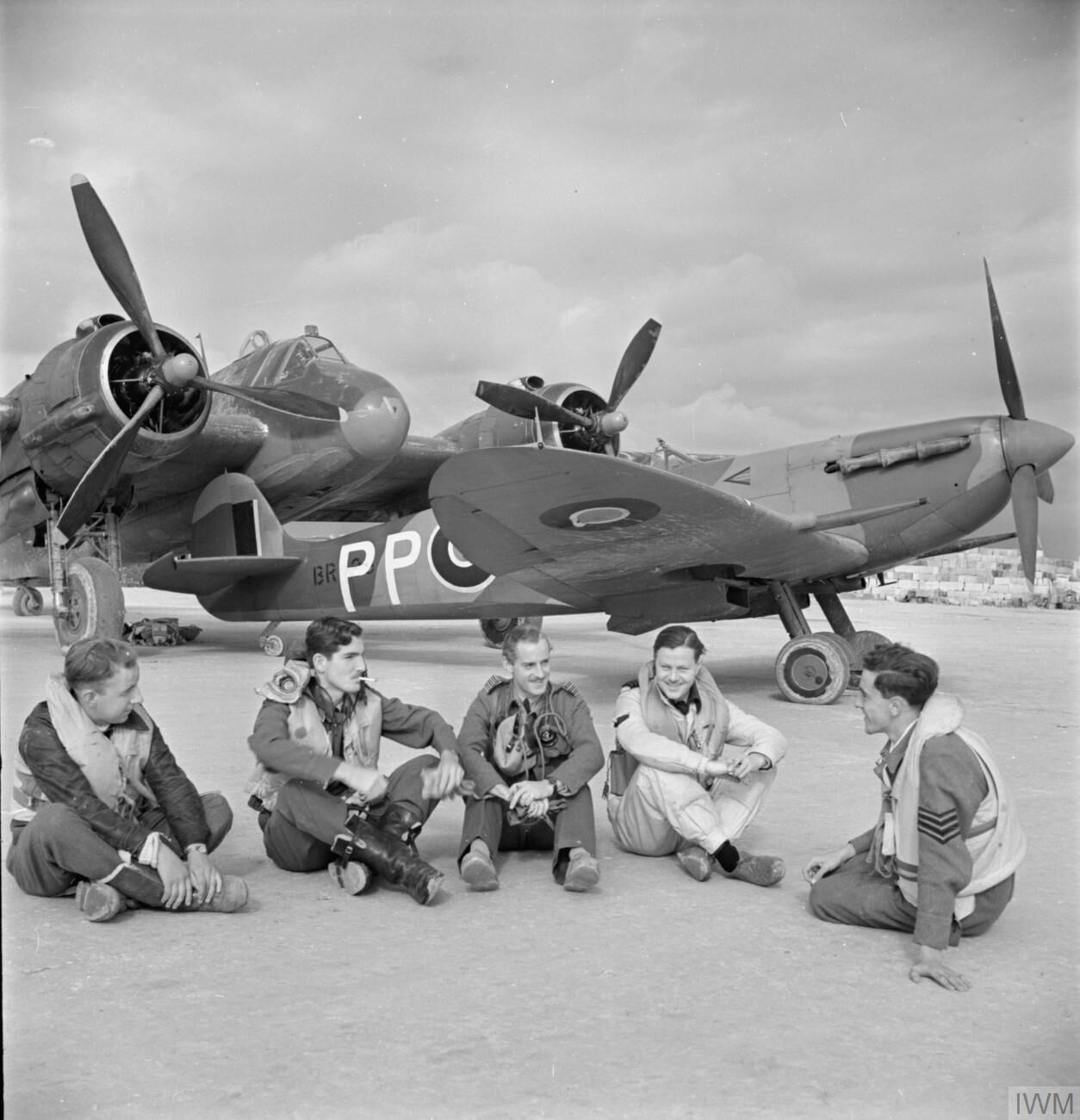
RAF pilots at Luqa Malta in 1943
RAF pilots at Luqa, Malta, January 1943. IWM CM 4724.

At Pachino in Sicily, ground crews serviced Spitfires in demanding conditions. Heat, dust, limited facilities and the pace of operations made reliable maintenance essential. The aircraft in the air were only the visible part of a much larger effort.

In Italy, Spitfire units supported the slow advance north through difficult terrain. Fighter patrols, reconnaissance and attacks on tactical targets helped Allied formations operate despite persistent resistance and changing weather.

Normandy and the invasion

On 6 June 1944, Allied air forces undertook a vast effort to protect the Normandy landings. Spitfires flew defensive patrols above the beaches and shipping lanes, helping prevent German aircraft from disrupting the assault.
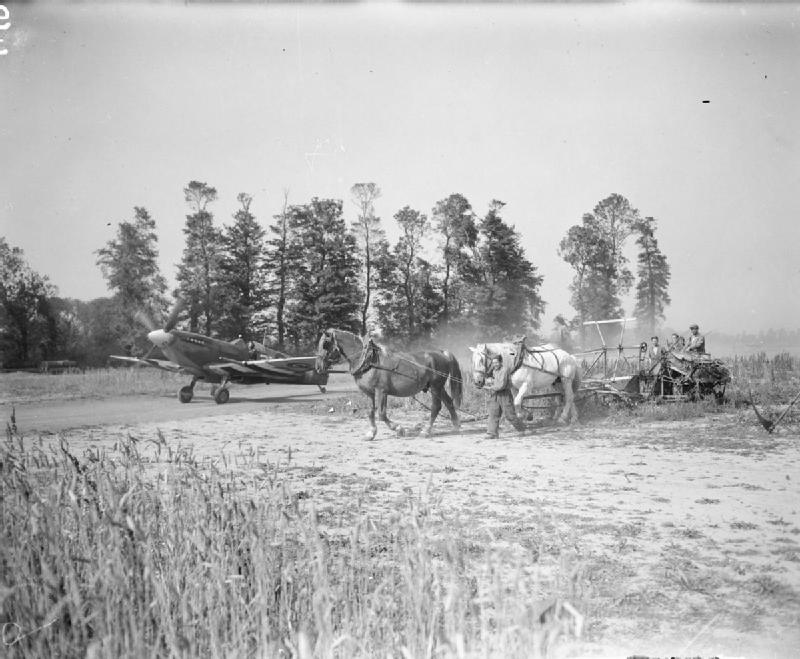
Spitfire at Bazenville Normandy 1944
No. 443 Squadron RCAF Spitfire at Bazenville, Normandy, 1944. IWM CL 614.

As the beachhead expanded, squadrons moved onto airfields in France. A photograph of a Canadian Spitfire at Bazenville shows how quickly the air campaign followed the army inland. Forward bases reduced flying time to the front but exposed aircraft and crews to difficult operating conditions.

Air superiority was not the same as safety. Anti-aircraft fire, bad weather and mechanical failures remained constant hazards, while pilots were frequently called upon to support troops at short notice.

Following the Allied advance

As Allied armies advanced through France, Belgium and the Netherlands, Spitfire units continued to move with them. Fighter cover, armed reconnaissance and tactical support became central tasks, alongside the familiar requirement to challenge enemy aircraft.
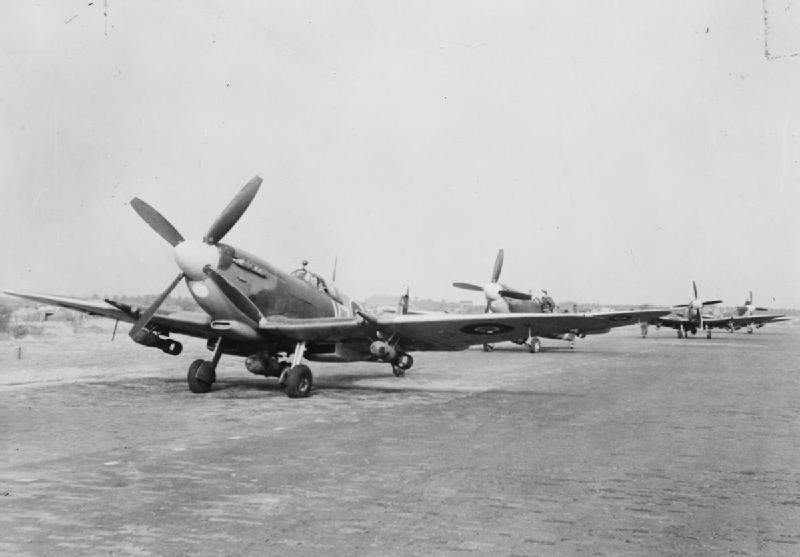
RAF Fighter Command Spitfires during the Second World War
RAF Fighter Command Spitfires, 1944. IWM CL 1450.

The work relied on close cooperation among aircrew, engineers, armourers, transport personnel and controllers. A successful mission began long before take-off and continued after landing, when aircraft had to be inspected, repaired, refuelled and rearmed.

By the final months of the war, the Spitfire had evolved far beyond the fighter that defended Britain in 1940. Its service across Europe reflected the ingenuity of its designers and the adaptability of the people who flew and maintained it.
Archival photographs: Imperial War Museums CNA 1013 (Sicily), CM 4724 (Malta) and CL 614 (Normandy).

FEATURED WORK

Two fighter aircraft in combat over the sea near Malta.

Malta – The Turning Point

The struggle for the Mediterranean. Anthony Saunders’ Malta – The Turning Point evokes the vital role of the Spitfire in the island’s defence and the wider Allied campaign in the Mediterranean.

Malta was a strategic base in the battle for the central Mediterranean. Its defence and the air campaign around it helped shape the conditions for the Allied advance towards Sicily and Italy.

EXPLORE THE CHAPTER

Selected artwork: towards victory

Explore paintings reflecting the Spitfire’s wartime service across the Mediterranean, Normandy and the wider European campaign.

Two fighter aircraft in combat over the sea near Malta.

Malta – The Turning Point

Anthony Saunders evokes the Spitfire’s role in the battle for Malta and the wider Mediterranean air war.

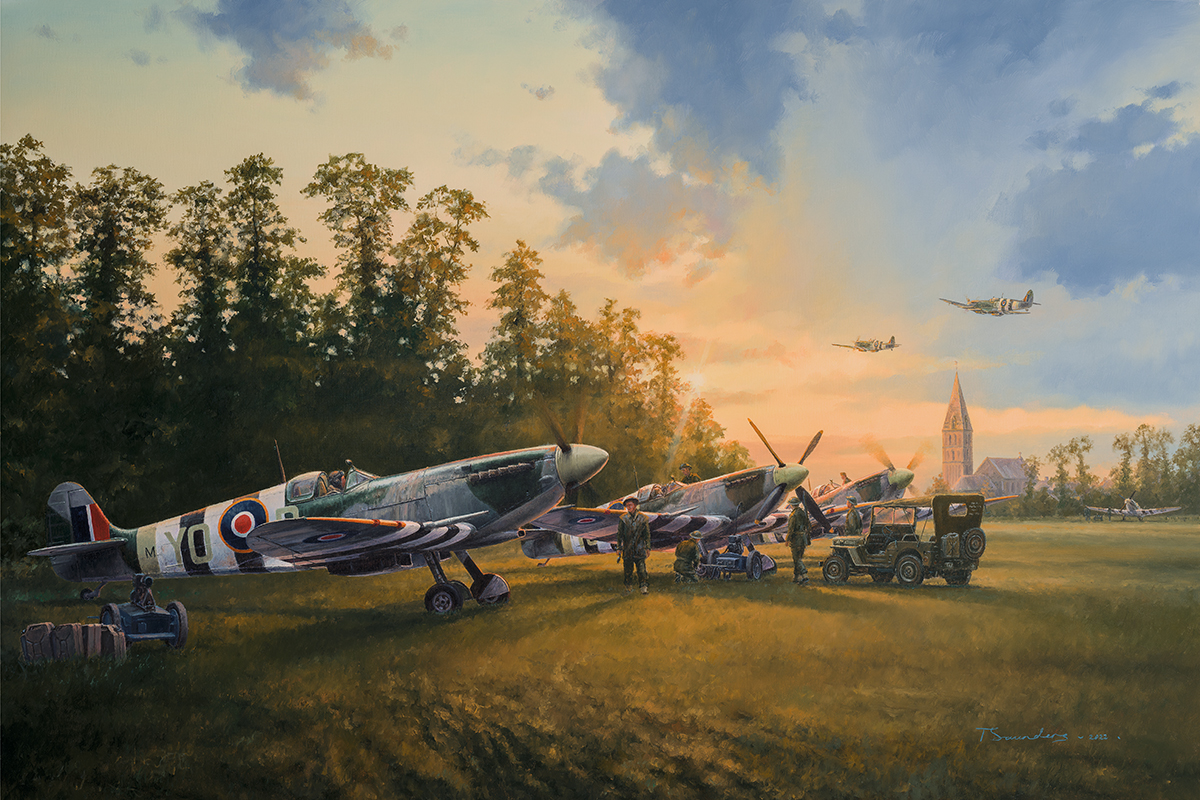
Spitfires and ground crew at a wartime airfield near Normandy.

Breakout From Normandy

Anthony Saunders recalls the Allied breakout from Normandy and the air operations that accompanied the advance.

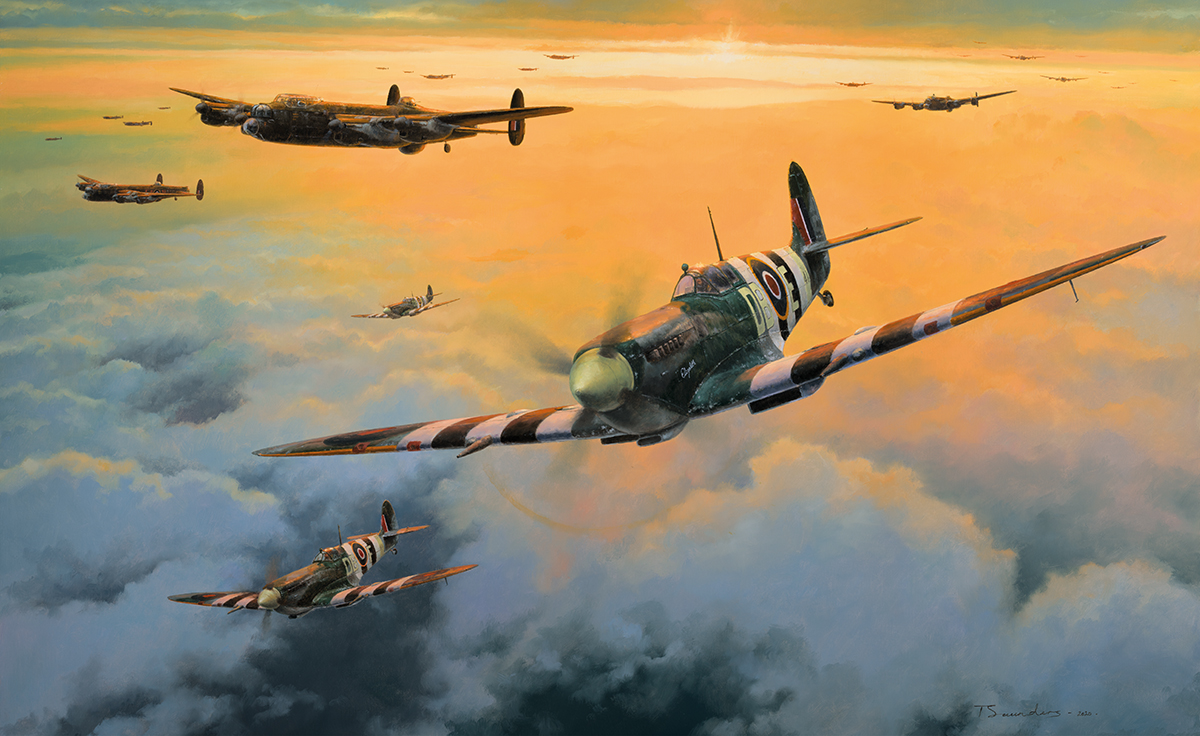
RAF fighter aircraft in formation beneath dramatic evening clouds.

Escort to Normandy

Anthony Saunders portrays the aerial protection that was essential to the Allied landings and operations over Normandy.

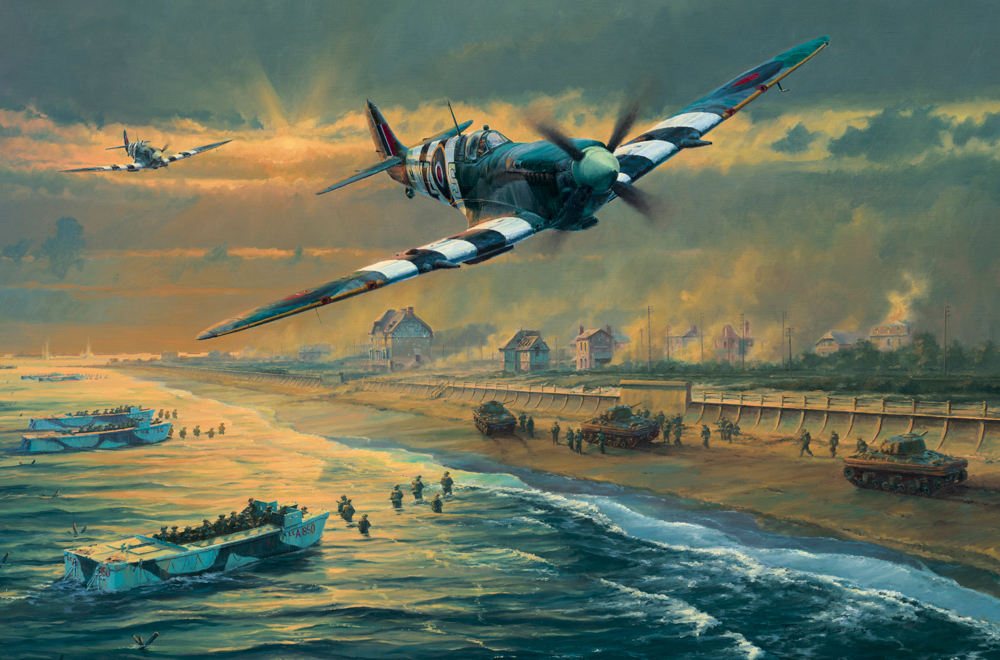
Allied landing craft, troops and aircraft during the Normandy landings.

Juno Beach

Anthony Saunders commemorates the Normandy landings and the courage of those who fought to establish a foothold in France.

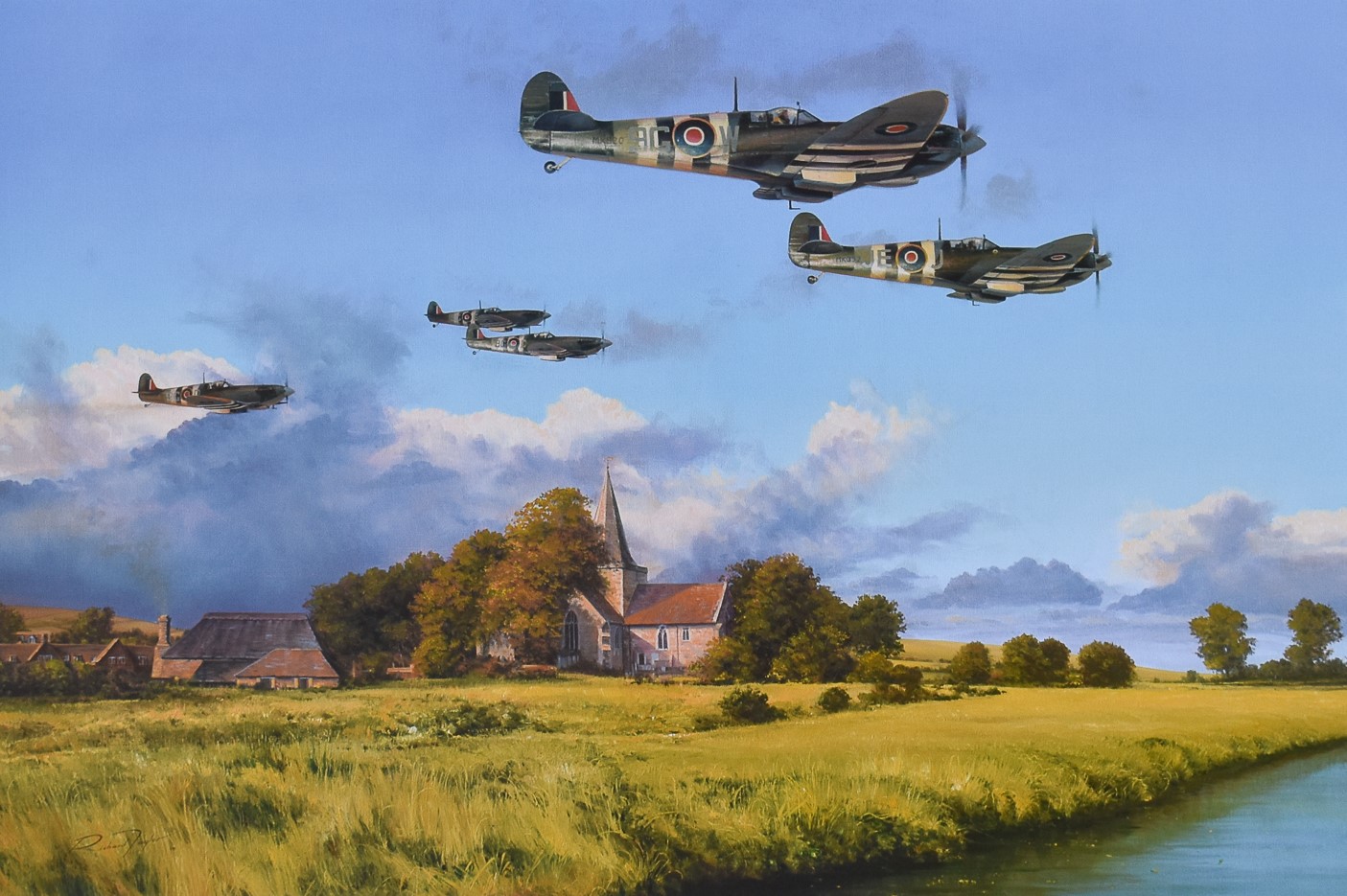
A formation of Spitfires over a village, church and winding river.

Dawn Till Dusk

Richard Taylor captures the demanding tempo of wartime flying, from the first sorties of the day to the last.

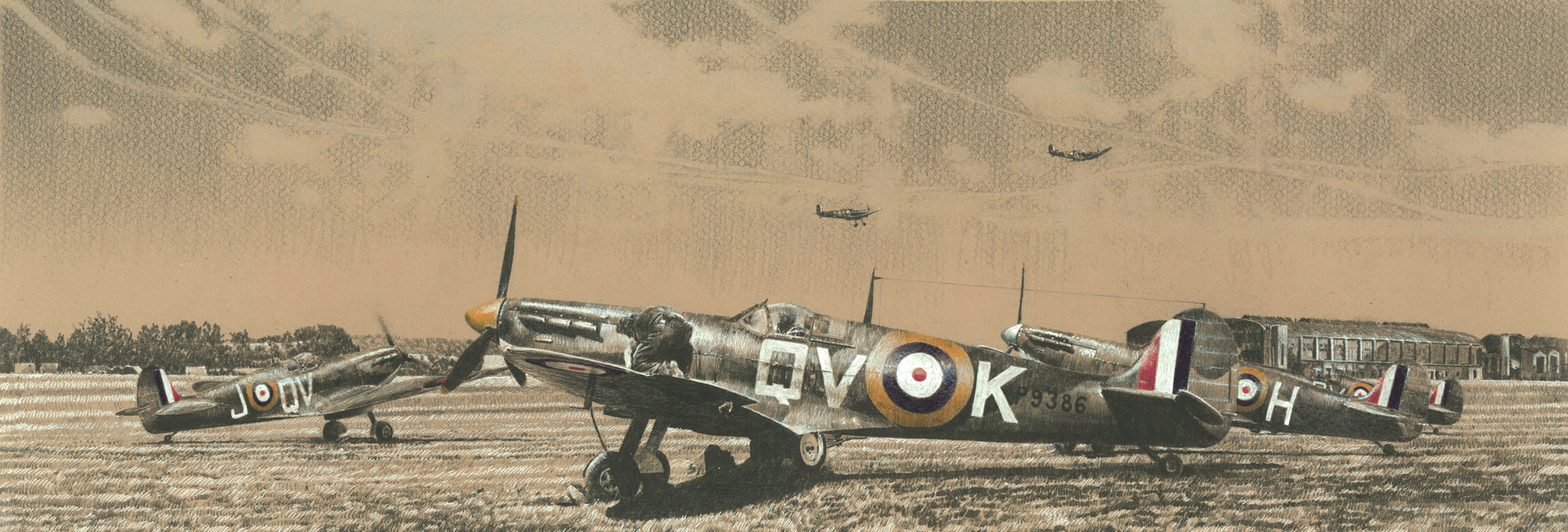
RAF aircraft parked on a grass airfield with wartime hangars behind.

Unscheduled Arrival

Richard Taylor depicts an evocative moment in the wartime Spitfire story, reminding us that not every mission ended as planned.