JET ART GALLERY PRESENTS

THE CLASSIC JETS COLLECTION

The first generations of jet-powered aviation.

Explore the aircraft that transformed military aviation in the first decades of the jet age. From the pioneering Gloster Meteor and de Havilland Vampire to the Hawker Hunter, English Electric Canberra and supersonic Lightning, these remarkable machines reshaped the skies. Discover the Blackburn Buccaneer and F-4 Phantom II alongside limited edition aviation artwork celebrating the aircraft, their crews and their operational history.

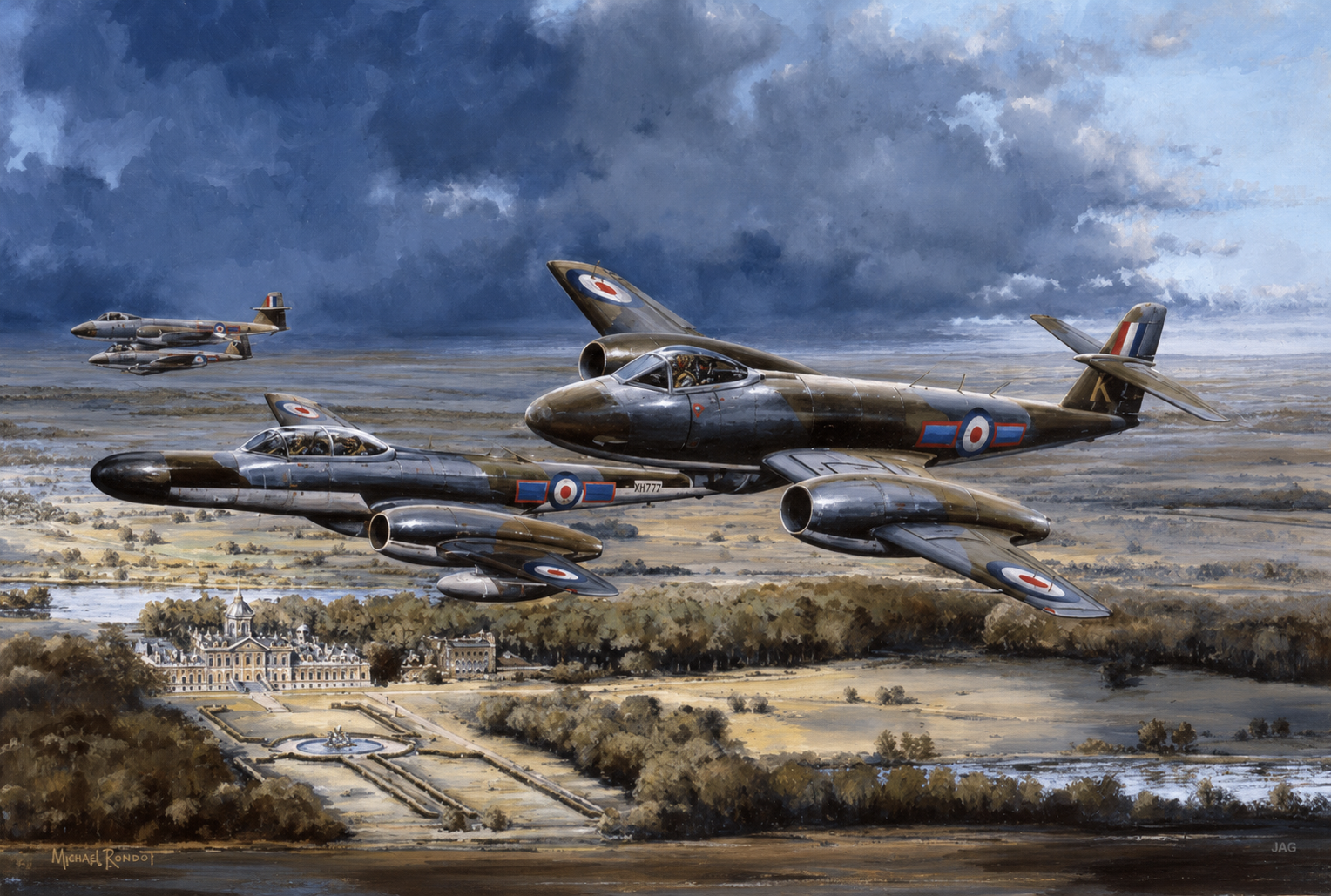
Meteors Over Castle Howard aviation artwork

GLOSTER METEOR

1944–1965 · RAF service

Britain’s first operational jet fighter

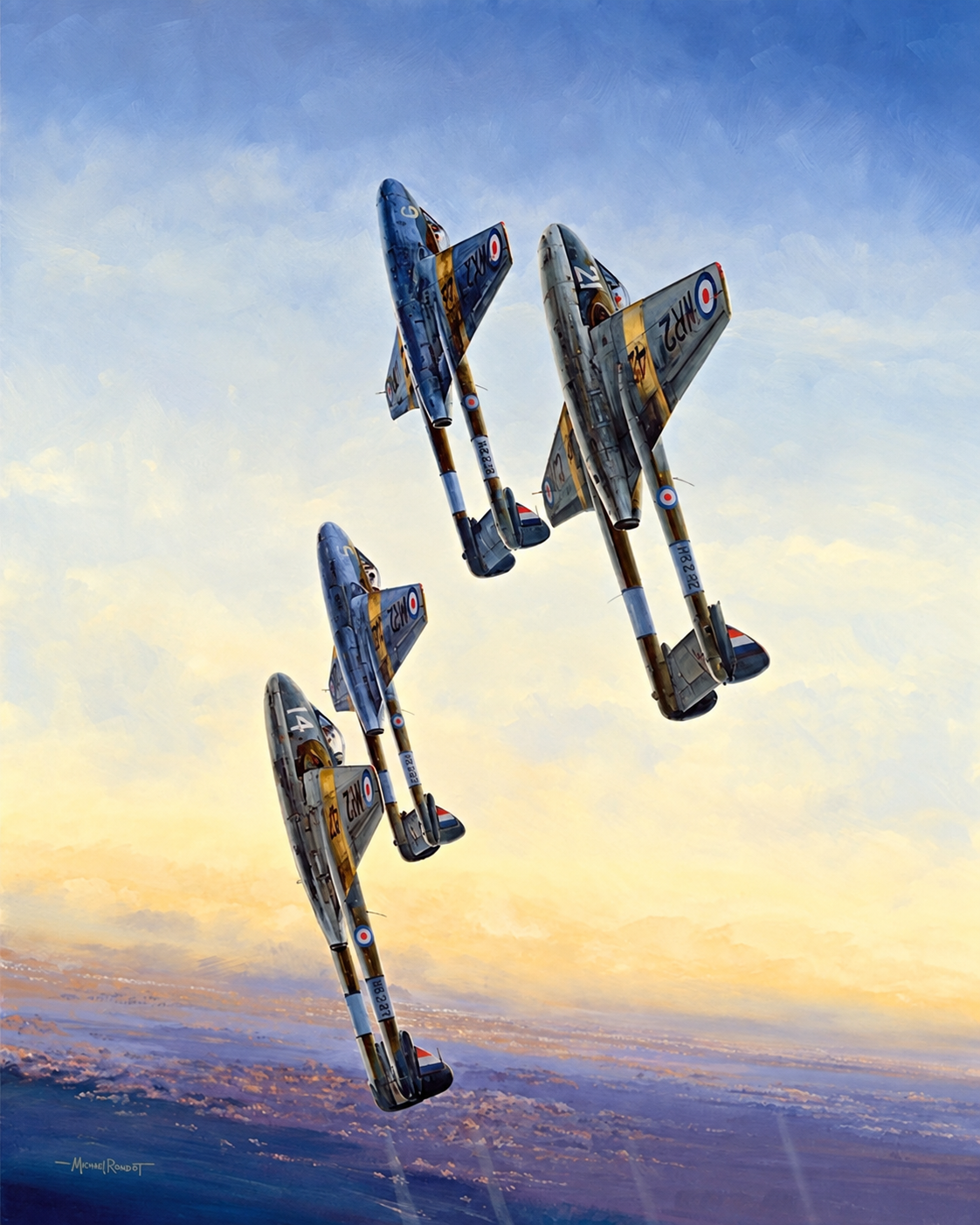
Painting of four WWII-era British fighter planes in formation, silhouetted against a blue-to-sunset sky with RAF roundels on their wings.

DE HAVILLAND VAMPIRE

1946–1966 · RAF service

Early British jet fighter heritage

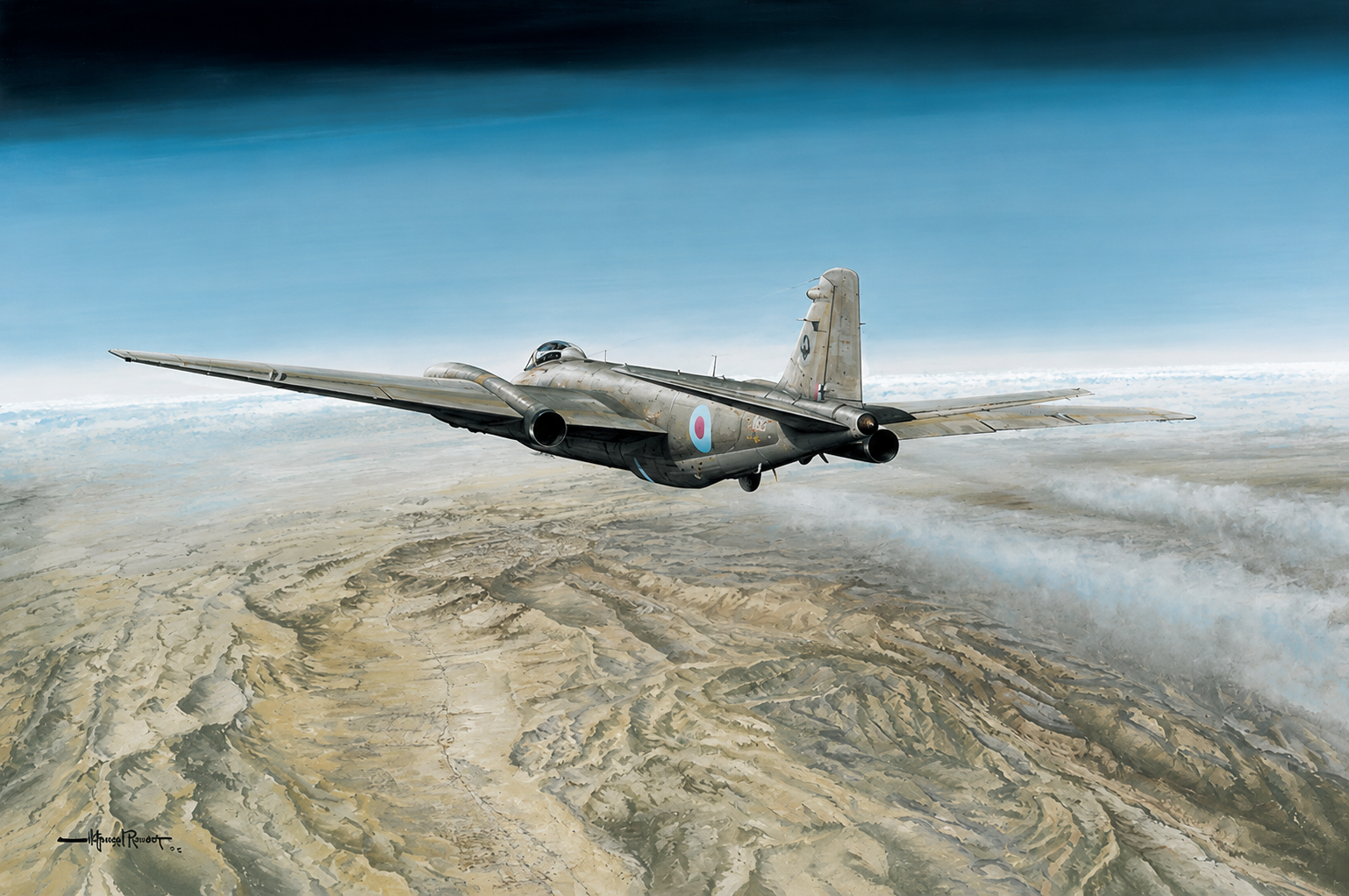
RAF jet, silver with roundel, flying over a desert canyon under a blue sky.

ENGLISH ELECTRIC CANBERRA

1951–2006 · RAF service

Pioneering jet bomber and reconnaissance aircraft

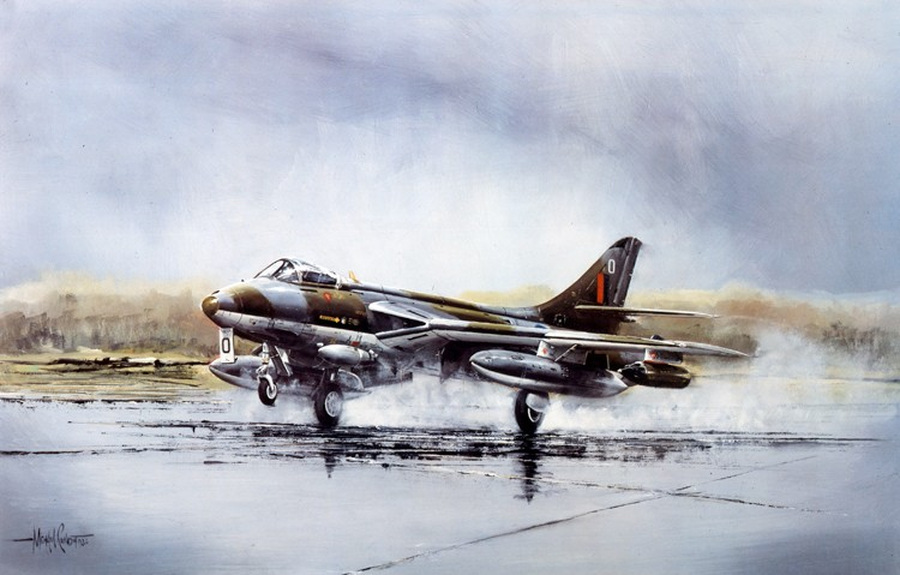
Painting of a military fighter jet on a rain-soaked airstrip, spraying water as it taxis/lands with reflected puddles nearby.

HAWKER HUNTER

1954–1994 · RAF service

Classic RAF jet fighter operations

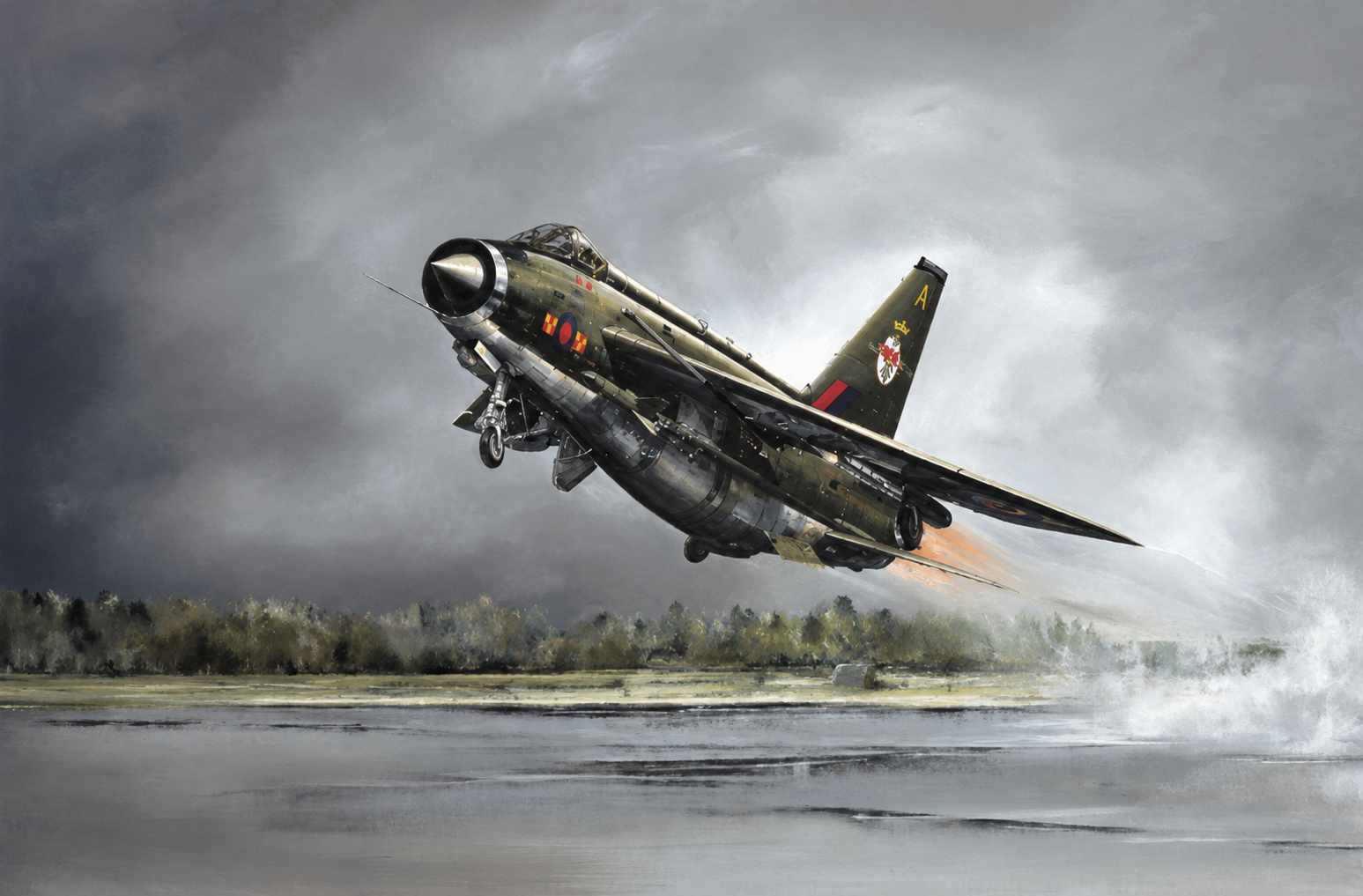
English Electric Lightning aviation artwork

ENGLISH ELECTRIC LIGHTNING

1960–1988 · RAF service

Supersonic RAF interception

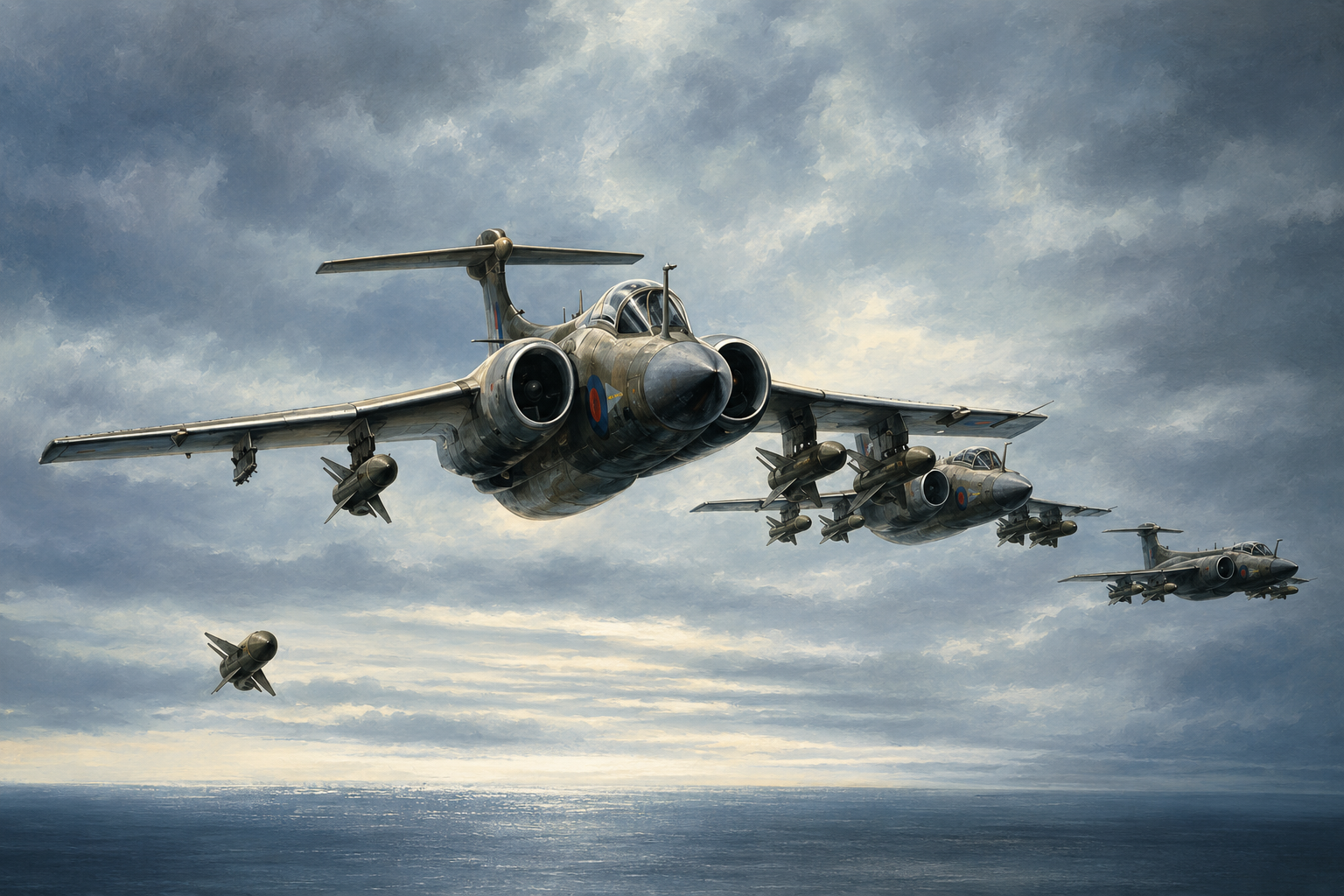
Four military jets fly in formation over the ocean beneath a cloudy sky.

BLACKBURN BUCCANEER

1962–1994 · UK service

Low-level maritime strike aircraft

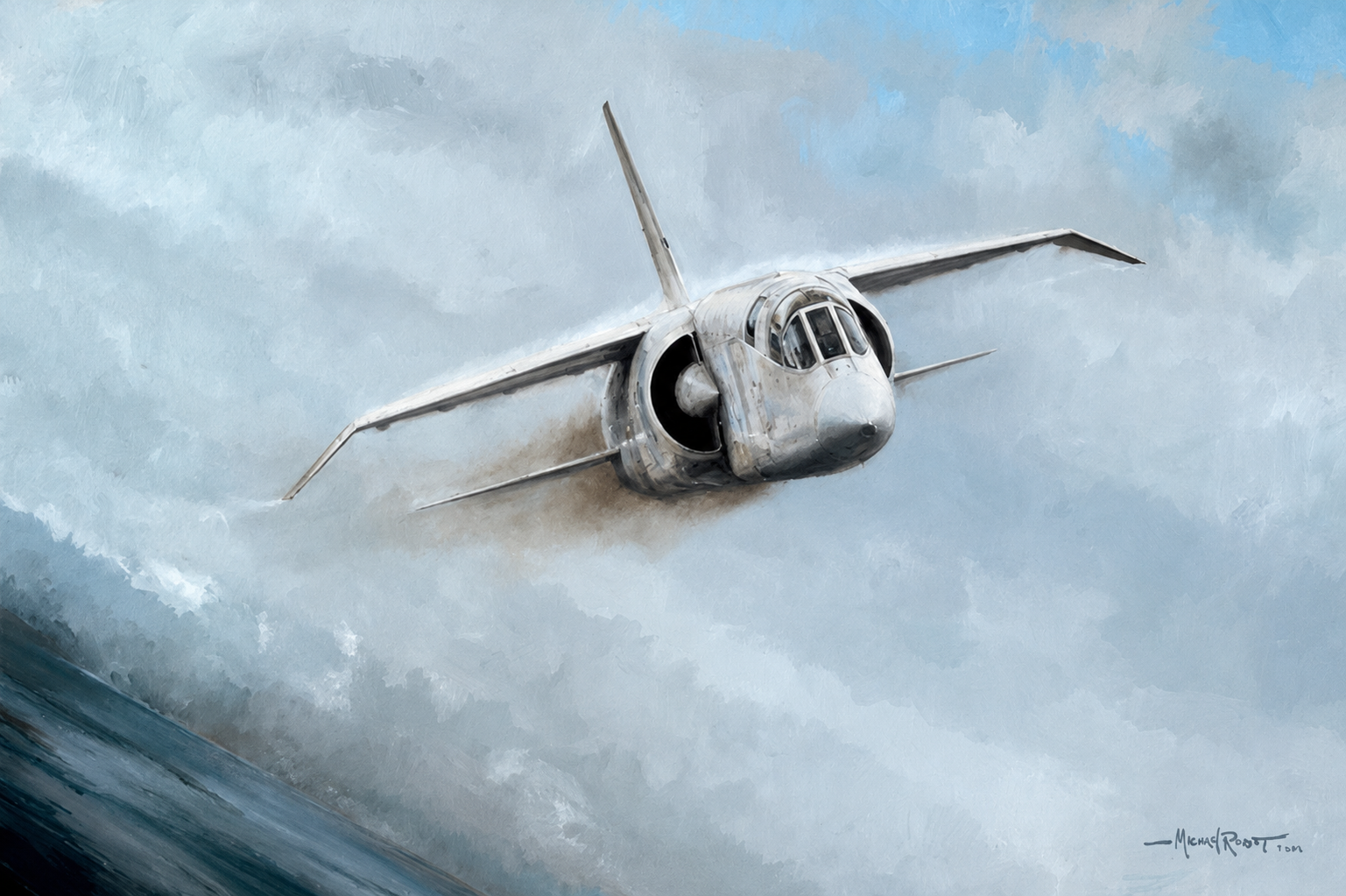
BAC TSR2 in The Fourth Dimension aviation artwork by Michael Rondot

BAC TSR-2

1964–1965 · Prototype programme

Advanced British strike and reconnaissance prototype

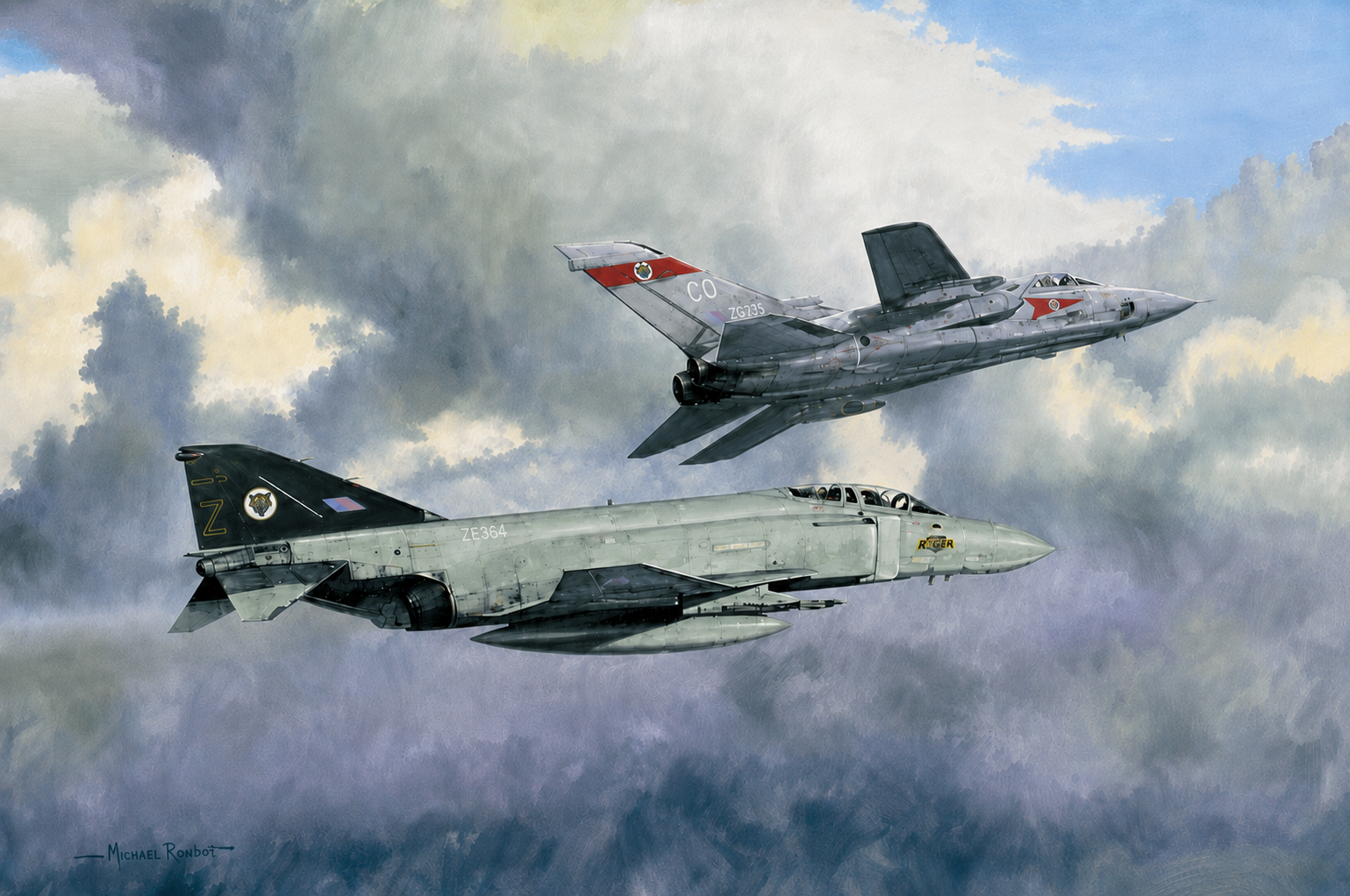
Two vintage military jets in formation flight through cloudy skies; a green-gray fuselage leads below while a silver jet passes overhead far right.

F-4 PHANTOM II

1968–1992 · UK service

Iconic all-weather fighter and interceptor

THE DAWN OF THE JET AGE

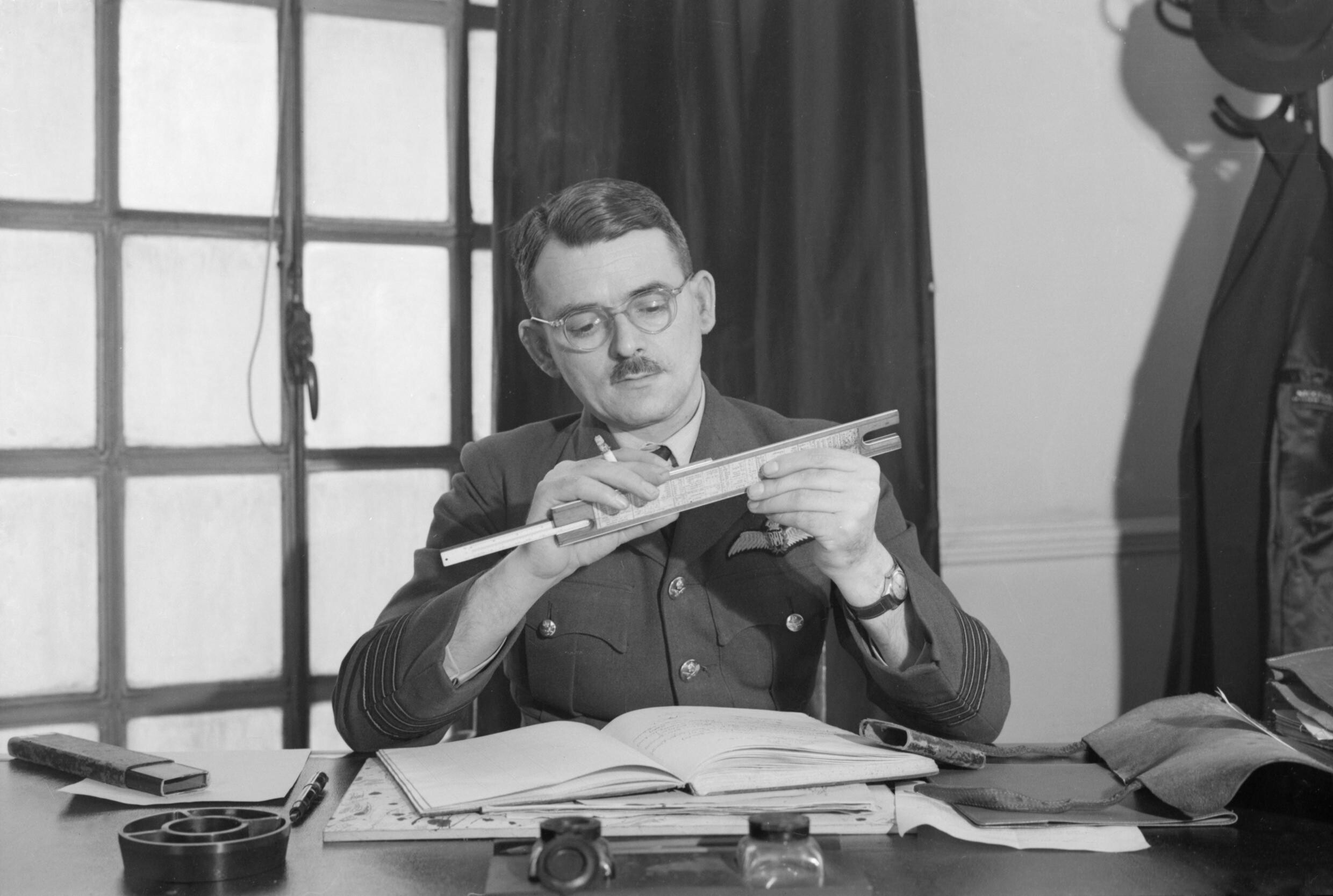
The story of Britain’s jet age begins with Air Commodore Sir Frank Whittle, whose imagination, engineering brilliance and determination helped transform aviation. In 1930 he patented a turbojet propulsion concept, but the path from theory to flight demanded years of experimentation and perseverance.

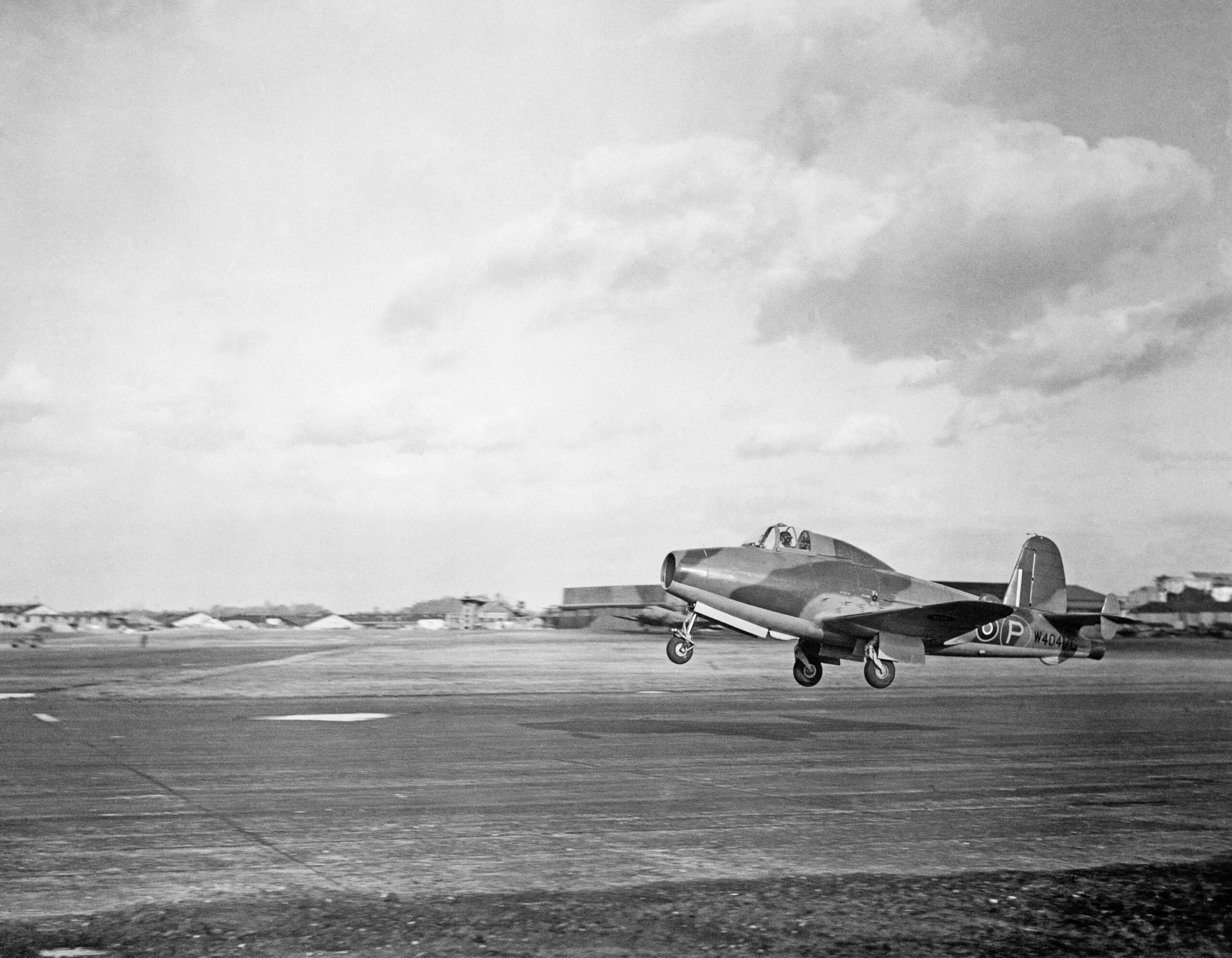
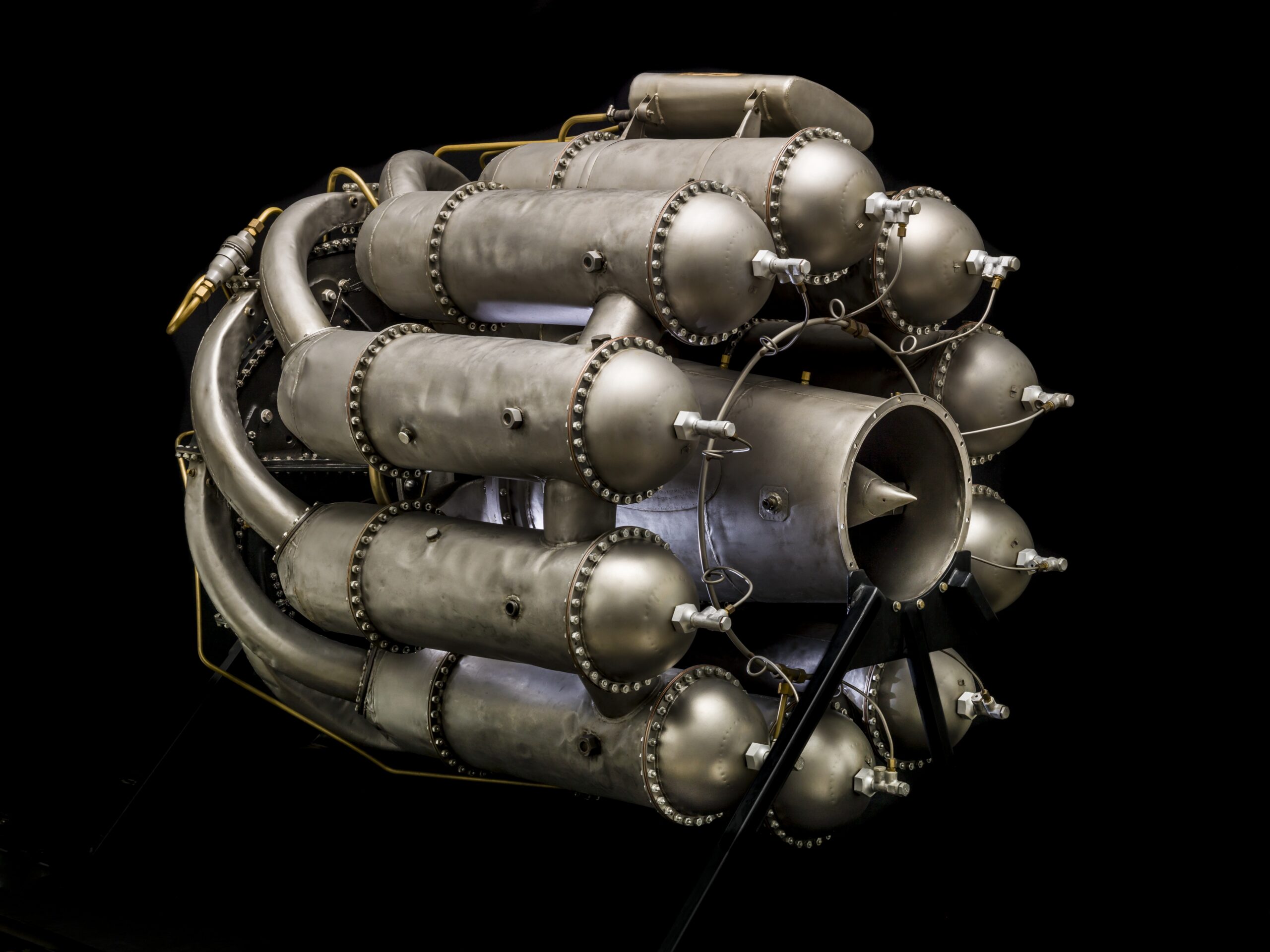
On 15 May 1941, the Gloster E.28/39, powered by Whittle’s W.1 turbojet engine, made its historic first flight at RAF Cranwell with test pilot Gerry Sayer at the controls. Just three years later, the Gloster Meteor entered RAF service, marking the beginning of a new era in British military aviation.

Sir Frank Whittle at his desk in 1943
Sir Frank Whittle at his desk in 1943Imperial War Museums / British Government (public domain)
Gloster E.28/39 during flight testing
Gloster E.28/39 during flight testingAir Historical Branch–RAF / MOD (Open Government Licence)
Whittle W.1X turbojet engine
Whittle W.1X turbojet engineSmithsonian National Air and Space Museum (CC0)

The decades that followed brought the de Havilland Vampire, English Electric Canberra, Hawker Hunter, Lightning and Blackburn Buccaneer, each advancing the boundaries of speed, altitude or operational capability. The ambitious TSR-2 demonstrated the reach of British engineering, although it never entered service, while the F-4 Phantom II became an enduring part of Royal Navy and RAF aviation history.

Through these aircraft and the limited edition artwork celebrating them, this collection honours the designers, engineers, ground crews and aircrew who shaped the jet age. Above all, it pays tribute to Sir Frank Whittle, whose pioneering vision helped make that age possible.