


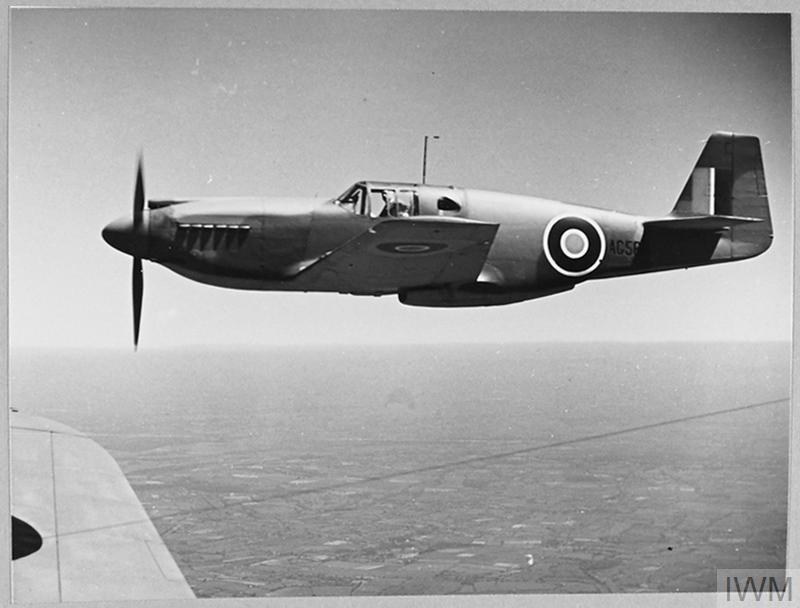
The North American P-51 Mustang became one of the most celebrated fighters of the Second World War, yet its story began not with an American military order, but with a British request. In 1940, with war already raging in Europe, the British Purchasing Commission sought additional fighter aircraft from the United States. It approached North American Aviation about building Curtiss P-40 fighters under licence. North American proposed something more ambitious: an entirely new fighter designed around British requirements.
The company moved with remarkable speed. Its NA-73X prototype first flew in October 1940, only months after the British order. The new aircraft had a streamlined fuselage, a laminar-flow wing and an efficient radiator arrangement. Britain named it the Mustang, and the Royal Air Force became its first operational customer. Early Mustangs entered RAF service in 1942, particularly in low-level reconnaissance and army-cooperation roles.
The first Mustangs were powered by Allison engines. They performed well at low and medium altitude but lacked the high-altitude performance needed to challenge German fighters where American heavy bombers operated. Engineers at Rolls-Royce recognised that the Mustang’s advanced airframe might be transformed by installing the two-stage supercharged Merlin engine, already proven in British fighters.
In 1942, experimental Merlin-powered Mustangs were tested in Britain, demonstrating greatly improved performance at altitude. North American pursued similar development in the United States, and the Packard-built version of the Rolls-Royce Merlin powered production P-51B and P-51C fighters, followed by the famous P-51D. The result combined American aerodynamic design and manufacturing with British engine technology. The Mustang was no longer merely a capable low-level aircraft: it had become a formidable high-altitude fighter.
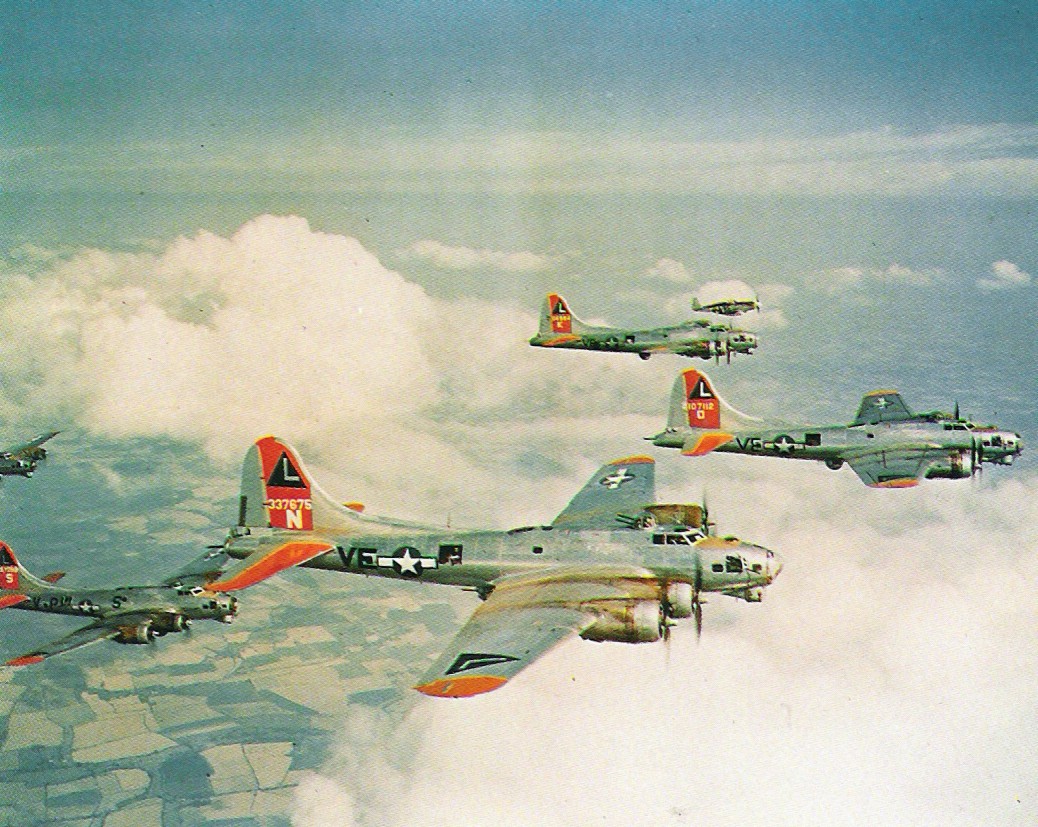
By 1943, the United States Eighth Air Force was launching daylight bombing missions from bases across eastern England against factories, transport networks and other targets in occupied Europe and Germany. The B-17 Flying Fortress and B-24 Liberator could fly deep into enemy territory, but escort fighters initially lacked the range to accompany them all the way. When escorts turned back, bomber formations faced determined Luftwaffe attacks, with devastating losses on some missions.
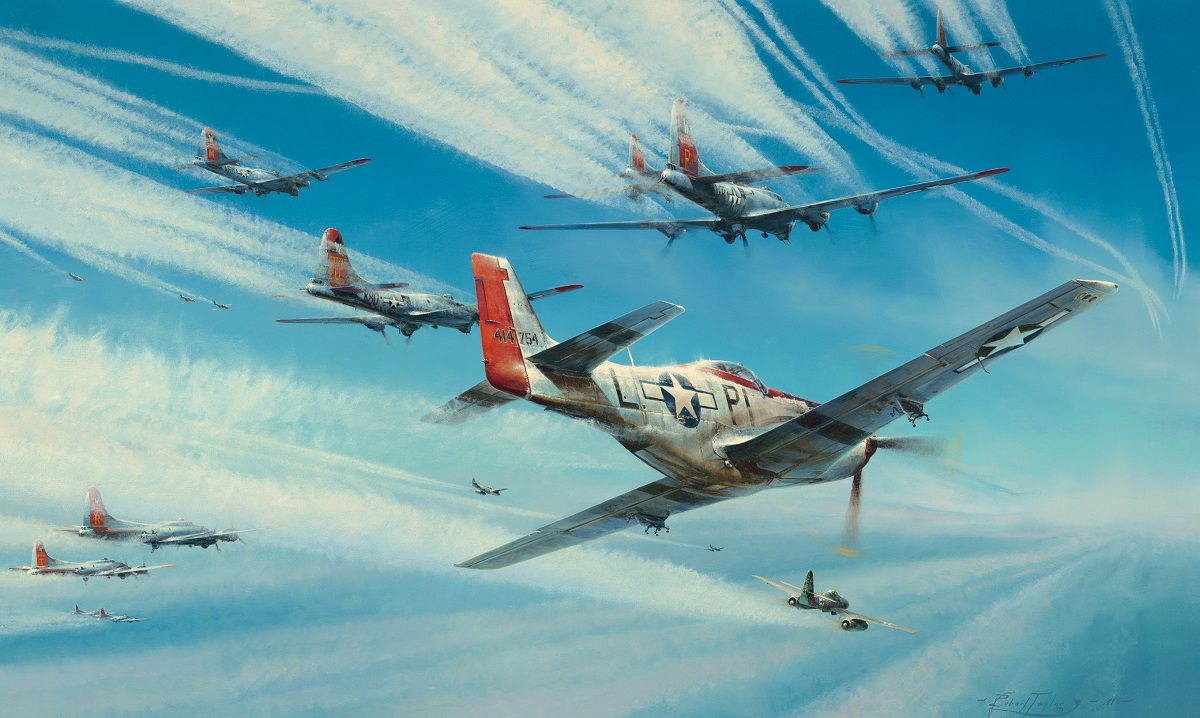
The Merlin-powered Mustang helped change that equation. Its efficient design, substantial internal fuel capacity and external drop tanks allowed fighter groups to protect bombers far beyond the distances previously possible. The P-51 was not the only long-range escort aircraft, and improved P-38s and P-47s also played important roles, but the Mustang became central to the Eighth Air Force’s escort campaign from late 1943 onwards.
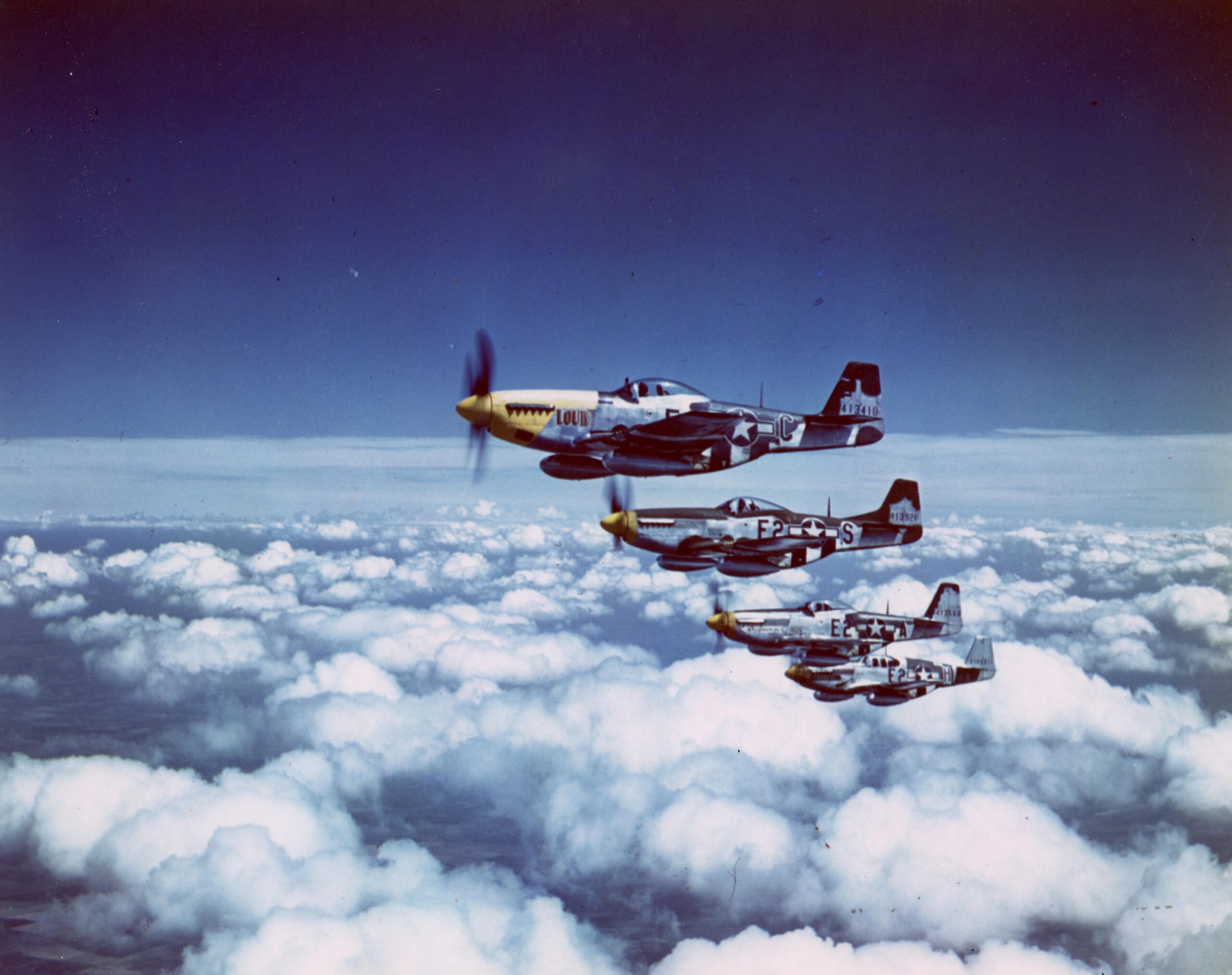
By early 1944, Mustangs operating from British airfields could escort bomber formations to targets deep inside Germany, including Berlin, and return home. Fighters did not simply remain alongside the bombers throughout every minute of the journey: escort groups were coordinated along the route, relieved one another and engaged German interceptors before they could attack the formations. Their growing reach meant that Luftwaffe pilots could no longer rely on finding American bombers unprotected over Germany.
The Mustang’s impact was felt in the skies and on the ground. Escort fighters challenged German aircraft in combat and increasingly attacked enemy airfields and aircraft. Combined with the wider Allied air offensive, this pressure weakened the Luftwaffe during the critical months before D-Day. The Mustang’s success was therefore more than a technical achievement: it contributed to a decisive shift in the air war over Europe.
From a British order placed with an American manufacturer to the Rolls-Royce Merlin that unlocked its high-altitude potential, the P-51’s development was an exceptional example of Anglo-American cooperation. Built in the United States, refined through British engineering and flown by Allied pilots from British airfields, the Mustang helped make sustained long-range bomber escort possible. Its story remains a reminder that some of aviation’s greatest achievements were born through international partnership.
Historical photographs: Wikimedia Commons / USAAF / US National Archives. Photo captions identify the aircraft and circumstances shown; images are illustrative rather than depictions of specific Berlin missions.