
JET ART GALLERY PRESENTS
Explore RAF V Bomber aviation art celebrating three remarkable British aircraft and the aircrews who operated them. Created as the backbone of Britain’s airborne nuclear deterrent, the V-Force went on to serve in conventional operations, reconnaissance and aerial refuelling. Discover limited edition prints capturing the power, engineering and enduring legacy of these iconic Cold War bombers.
Designed during the early Cold War, the Vickers Valiant, Avro Vulcan and Handley Page Victor represented three distinct approaches to long-range jet bomber design. Together they equipped RAF Bomber Command’s strategic force, initially in high-altitude nuclear deterrence roles before changing threats and missions transformed their service. Explore the artwork of each aircraft below, including selected limited editions celebrating the squadrons, crews and operations behind the V-Force.
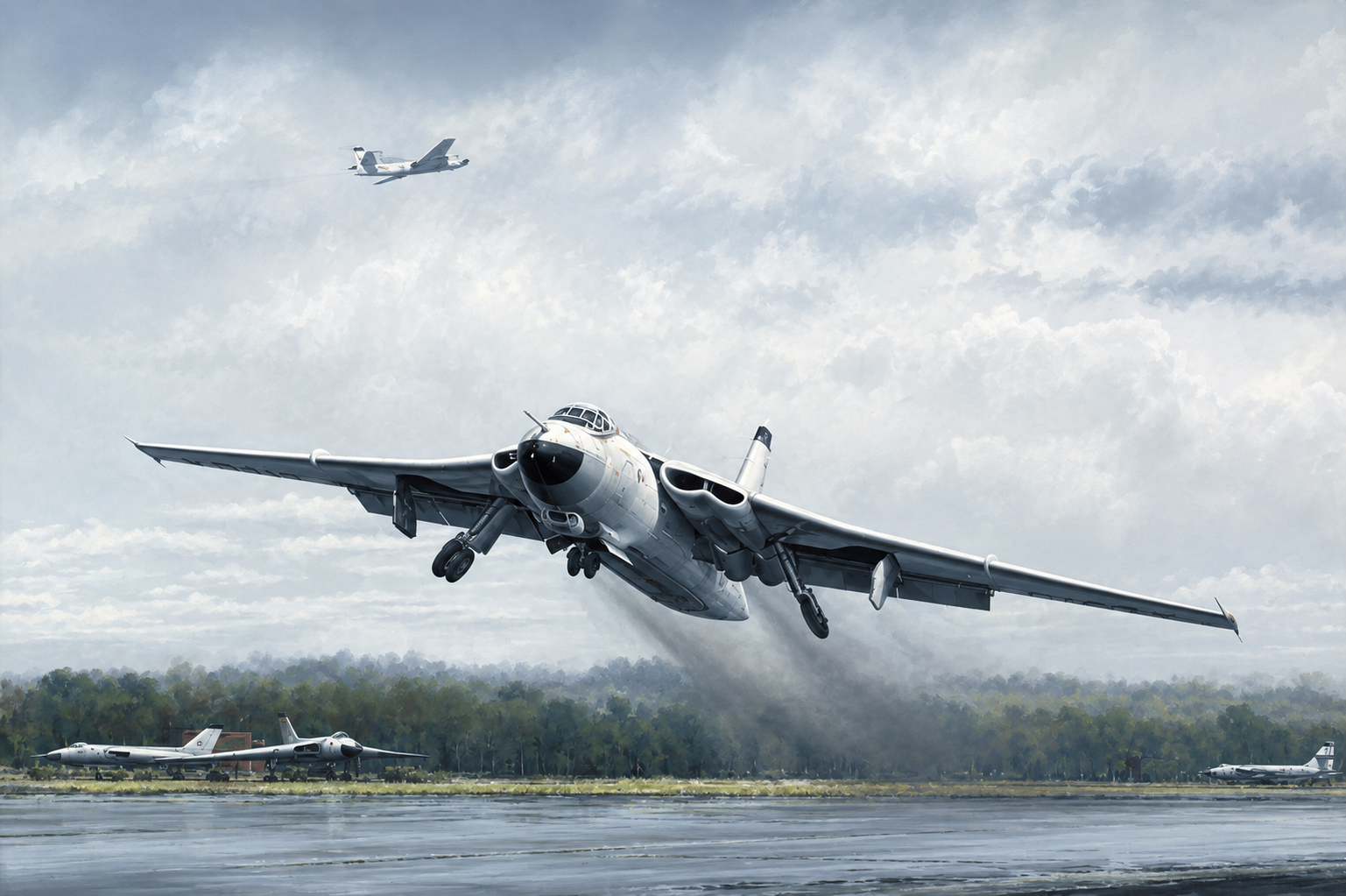
RAF service: 1955–1965
The first V-bomber to enter RAF service, the Valiant flew nuclear deterrent missions and saw conventional action during the 1956 Suez Crisis.
Explore the Artwork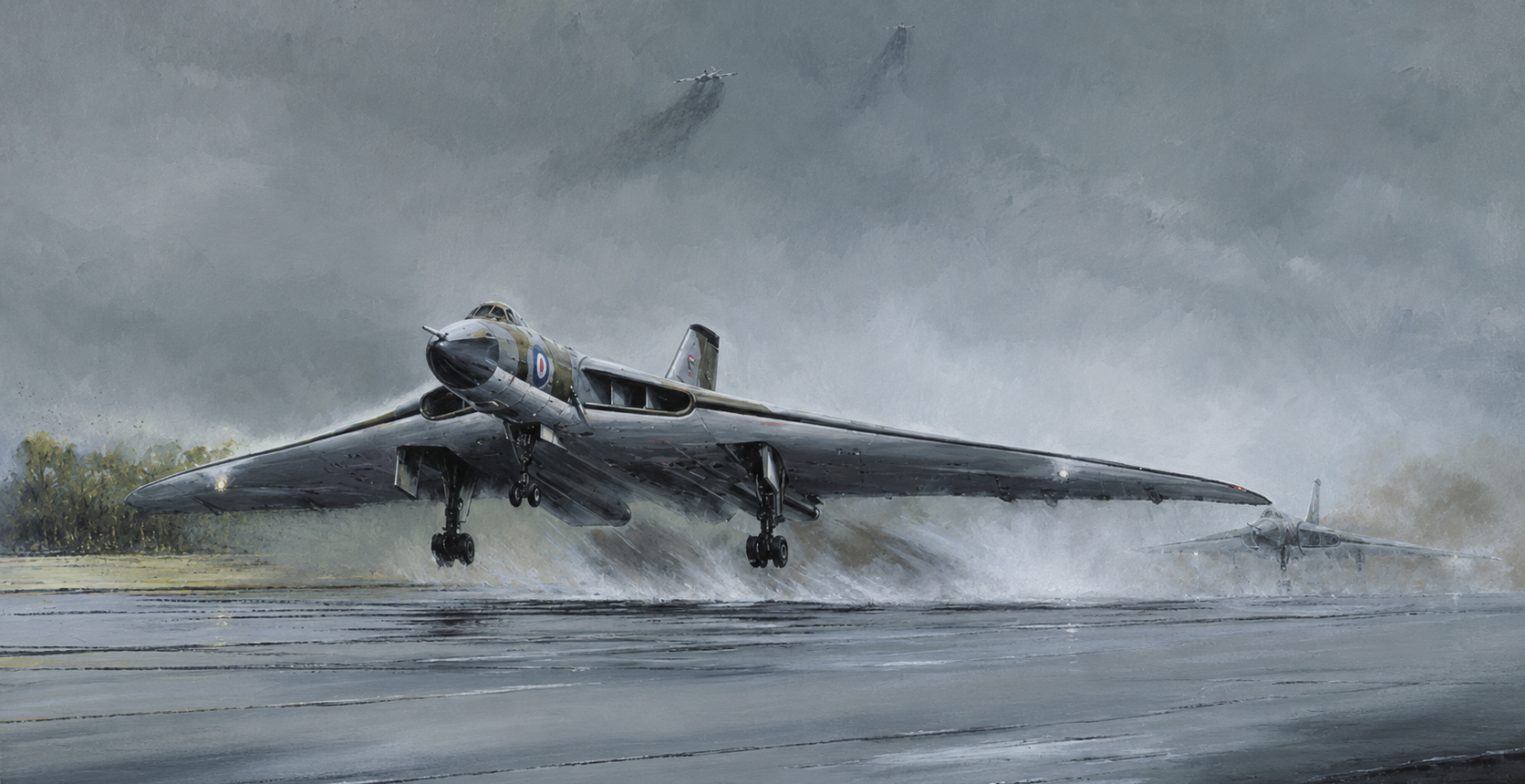
RAF service: 1956–1984
With its unmistakable delta wing, the Vulcan became a symbol of the V-Force and later flew the long-range Black Buck missions during the Falklands War.
Explore the Artwork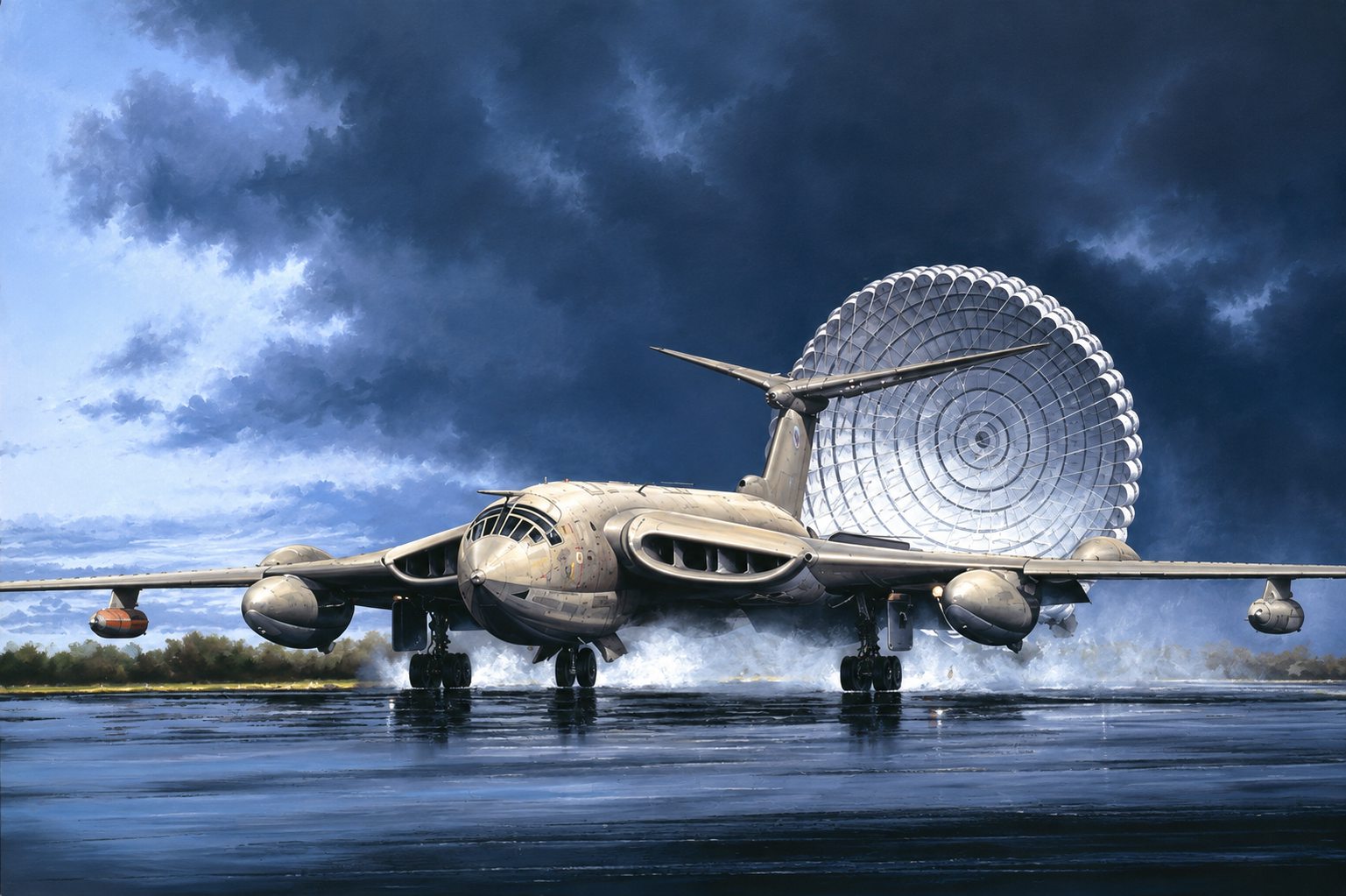
RAF service: 1958–1993
The Victor combined a distinctive crescent wing with long-range capability and later became indispensable as an RAF aerial refuelling tanker.
Explore the Artwork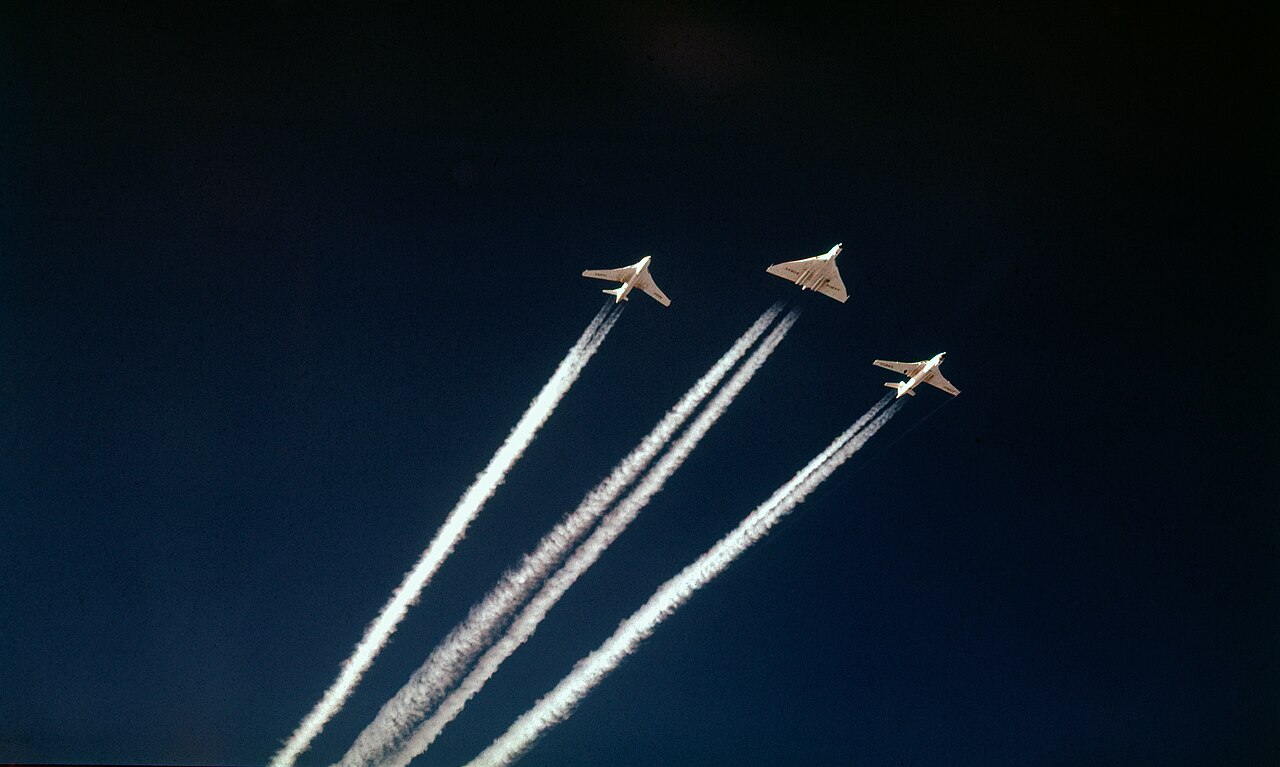
The V-Force was developed for the demanding strategic requirements of the 1950s, but its story extends far beyond the nuclear deterrent. As air defence technology advanced, the bombers adapted to low-level operations and new roles. Vulcans flew the Black Buck raids during the 1982 Falklands conflict, supported by a complex chain of Victor tankers. The Victor remained in service as a tanker through the 1991 Gulf War, demonstrating how the V-bomber story continued long after the original strategic mission had changed.
In the early years, crews trained to deliver Britain’s strategic deterrent from high altitude, supported by demanding navigation, engineering and ground operations. The changing threat from surface-to-air missiles brought a shift towards low-level penetration, while the Valiant was withdrawn in 1965 after fatigue problems were discovered. The Vulcan continued in its bombing and maritime reconnaissance roles, and the Victor’s conversion into a tanker gave the RAF a crucial long-range support capability.
The Black Buck missions illustrated the scale of this transformation. Vulcan XM607’s raid on Port Stanley airfield required an extraordinary refuelling plan involving multiple Victor aircraft. Years later, Victor tankers supported coalition aircraft during Operation Granby, Britain’s contribution to the 1991 Gulf War.
The Valiant, Vulcan and Victor each left a distinctive mark on British aviation history. Their advanced designs, demanding missions and dedicated ground and aircrews continue to inspire aviation enthusiasts and collectors. Our V Bomber Force collection brings those stories to life through military aviation fine art, with individual print pages detailing the artist, edition, available signatures, dimensions and ordering options.
Each aircraft also represents a different engineering vision. The Valiant’s comparatively conventional swept wing helped bring the force into service first. The Vulcan’s delta planform made it instantly recognisable, while the Victor’s distinctive wing and high-mounted tail gave it an unmistakable silhouette. Together, they were among the most ambitious British aircraft of their generation.
Although the Valiant disappeared from service early, the Vulcan remained an icon long after its RAF retirement, and the Victor served into the 1990s. Preserved examples, veterans’ accounts and aviation art help keep alive the experiences of the aircrews and ground personnel who maintained this remarkable force.
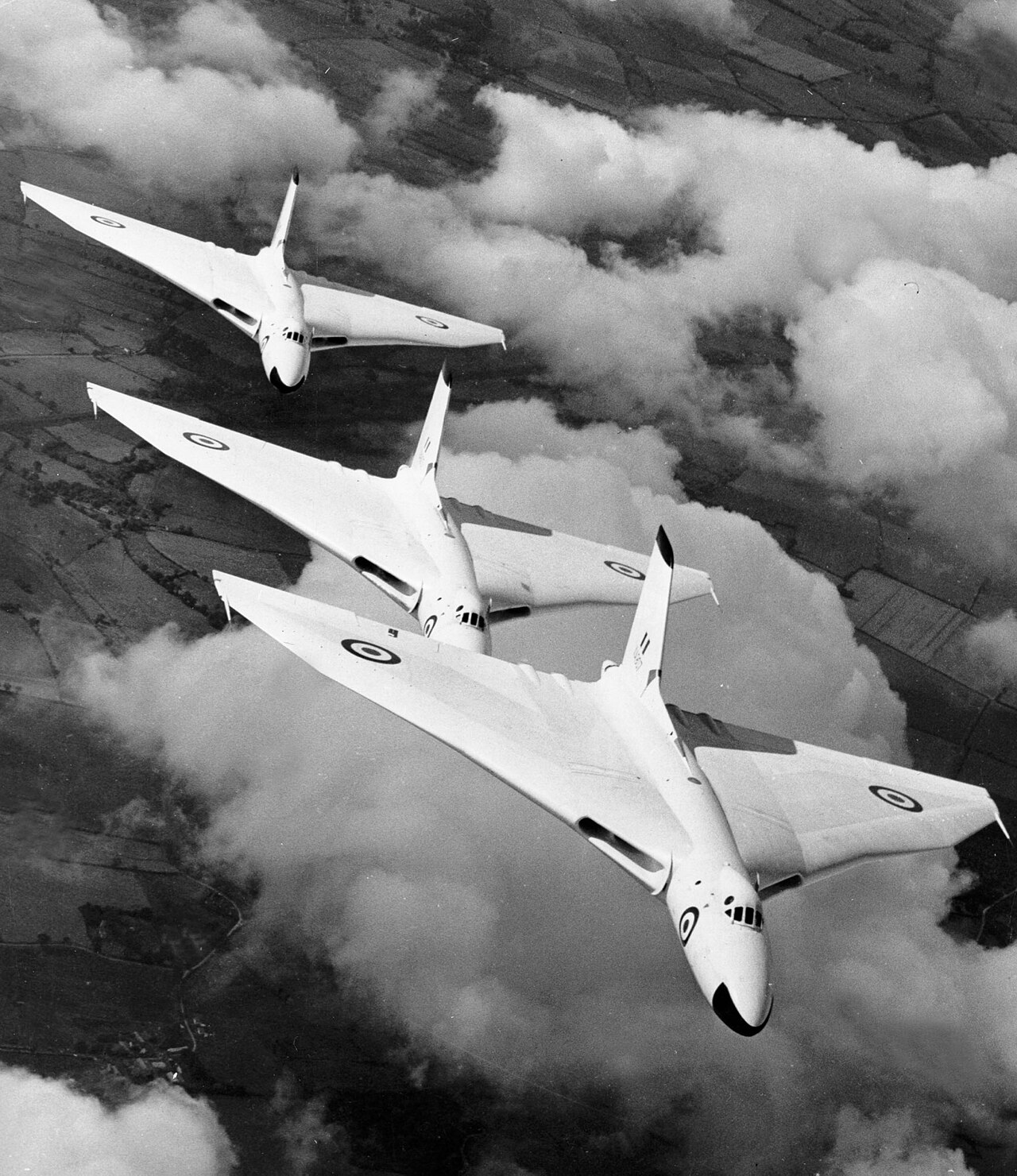
At the height of the Cold War, the Vulcan force was closely associated with RAF Waddington in Lincolnshire, one of the principal bases of Britain’s strategic bomber fleet. Formation flying, as captured in this 1957 photograph, demanded precise coordination between crews flying large, powerful aircraft. Behind each sortie stood an extensive team of engineers, armourers, navigators and ground personnel, whose work was essential to maintaining operational readiness.
For much of the Cold War, the V-Force maintained a demanding state of readiness as Britain’s airborne nuclear deterrent. Aircraft and crews trained to respond at short notice, while changing technology continually reshaped their tactics and equipment. The Vulcan’s remarkable service history, from strategic deterrence to the Falklands campaign, remains a testament to the adaptability of both the aircraft and those who operated it.
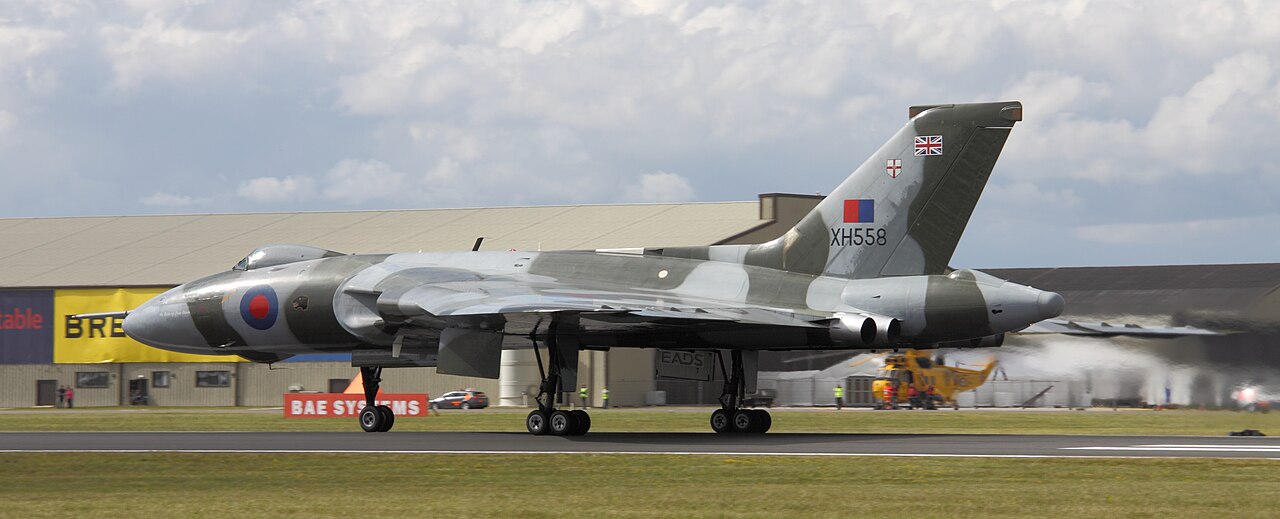
Few aircraft did more to bring the Vulcan’s story to new generations than XH558, the Spirit of Great Britain. Following an extraordinary restoration, she returned to flight in 2007 and became one of the great attractions of the British airshow circuit. For eight seasons, her dramatic displays and unmistakable Rolls-Royce Olympus engine howl captivated crowds, introducing millions to the aircraft and the people who designed, flew and maintained it. Her final flight took place on 28 October 2015.
Today XH558 is preserved by the Vulcan to the Sky Trust at Doncaster Sheffield Airport. Although she no longer flies, enthusiasts can still see her at specially organised visits and events, subject to availability. To discover her history, support her preservation or check upcoming opportunities to visit, see the official Vulcan XH558 website.
Explore more British military aviation artwork in The RAF Collection, or browse our wider limited edition aviation prints.